
Key Takeaways
- Starting a clothing brand comes down to five steps: find a niche, create designs, produce your apparel, build your brand and store, and launch.
- The opportunity is real — the global apparel market is worth ~$1.77 trillion, and custom apparel is growing about 11% a year, faster than the category overall.
- The biggest decision is how you make your products — printing in-house with a DTF or DTG machine gives you control and better margins than outsourcing.
- You can start small and lean: a handful of designs, print-on-demand or in-house printing, and a simple online store.
- Profit comes from a clear niche plus healthy margins — owning production is the fastest way to protect both.
A clothing brand is one of the most accessible businesses to start today — you can launch with a few designs and no warehouse. But the difference between a hobby and a real brand comes down to a few smart decisions: who you're for, what you sell, and especially how you produce it. This guide walks through how to start a clothing brand step by step, with the market data, niche ideas, and real costs you need to plan it properly.
Why start a clothing brand now?
Apparel is a massive, resilient market, and the tools to enter it have never been cheaper. A few numbers make the case:
- A trillion-dollar market. The global apparel market is valued at about $1.77 trillion (2024) and projected to reach $2.26 trillion by 2030 (Grand View Research).
- Custom apparel is the fast lane. The custom t-shirt printing market is growing at roughly 11.5% a year — from about $5.2 billion in 2024 to a projected $9.8 billion by 2030 (Grand View Research) — faster than apparel overall, which rewards niche, made-to-order brands.
- Low barrier to entry. With print-on-demand and affordable desktop printers, you can start a brand with a handful of designs and no bulk inventory — the reason so many small apparel businesses launch each year.
- Small business is a huge slice of the economy. Small businesses account for 43.5% of U.S. GDP (SBA Office of Advocacy), and apparel is one of the most popular categories for new founders.
In other words: a giant market, a niche-friendly growth trend, and cheap tools to start — a genuinely good time to build an apparel brand.
How do you start a clothing brand?
To start a clothing brand, choose a specific niche and audience, create a small collection of designs, decide how you'll produce your apparel (in-house printing or outsourcing), build your brand identity and an online store, then launch and market it. Start lean with a few strong products, and reinvest profits as demand grows.

Step 1: Find your niche
The most common reason clothing brands fail is being too generic. Pick a specific audience and point of view you can own — the tighter, the better. “T-shirts” is not a brand; “minimalist gear for trail runners” is. A focused niche makes your designs sharper, your marketing cheaper, and your customers more loyal.
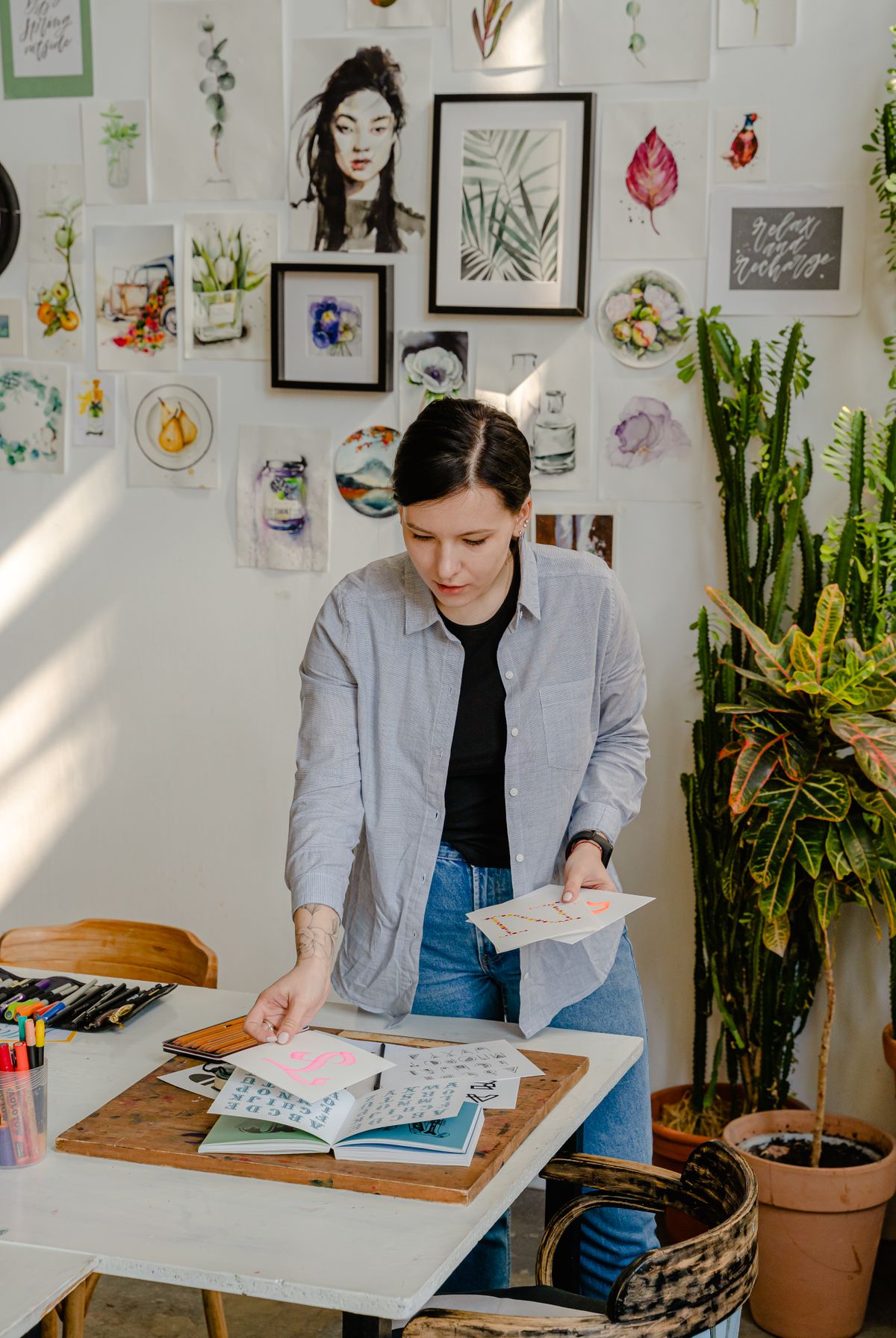
Popular clothing-brand niches
Most successful apparel brands live in one of these lanes. Use them as starting points, then go narrower:
- Streetwear & fashion — graphic tees, hoodies, and a strong visual identity.
- Activewear & sport — gym, running, yoga, climbing, cycling.
- Hobbies & interests — gaming, fishing, gardening, music, coffee, books.
- Pets & animals — dog and cat lovers, specific breeds.
- Professions & identity — nurses, teachers, trades; heritage, causes, and community pride.
- Humor & statement tees — relatable one-liners for a specific group.
- Sustainable & values-led — eco-friendly materials and ethical production.
Example: narrowing a hobby niche
Say you love cycling. Don't stop at “cycling apparel” — go to “funny tees for gravel cyclists” or “vintage-style jerseys for bike commuters.” The narrower the audience, the easier it is to design something they instantly recognize as for them — and the cheaper it is to reach them online.
Validate before you commit: check whether people already buy apparel in that space, follow the communities, and note what's missing.
Common apparel styles to sell
Most clothing brands build around a few core blanks. Here are the staples, who they suit, and what to know before you pick your line:
| Style | Best for | Notes |
|---|---|---|
| Classic T-shirt | The widest audience — start here | Cheapest blank, easiest to print, biggest print area for the price |
| Long-sleeve tee | Cooler seasons & layering | Same printing as a tee, higher price point |
| Pullover hoodie | Streetwear & premium lines | High margin and a large print canvas; heavier blank cost |
| Crewneck sweatshirt | Cozy, minimalist brands | Higher perceived value than a tee, no hood |
| Tank top | Summer, fitness & festivals | Lightweight; smaller print area |
| Polo shirt | Workwear, teams & golf | Usually embroidered rather than printed |
| Kids & baby | Gift and family niches | Onesies and small tees — cute, giftable designs sell well |
| Tote bag & cap | Low-cost add-ons | Great for testing designs; caps are typically embroidered |
Need product ideas to get started? Browse Atomm's free print project ideas for ready-made designs you can make and sell.
Step 2: Create your designs
Start with a small, cohesive collection — three to five designs beats twenty scattered ones. Your designs carry the brand, so make them intentional.

Ways to create your designs
- Do it yourself with tools like Canva or vector software — even bold text-based designs sell.
- Use AI to generate concepts, then refine them.
- Hire a designer for polished, original artwork if budget allows.
New to apparel design specifically? Our step-by-step guide on how to design a shirt walks through layout, placement, and print-ready files, and our shirt design ideas are a good source of inspiration.
Choose your blanks & prep print-ready files
The garment matters as much as the graphic — decide on fabric, fit, and colors, and order plain samples to feel the quality. Export print-ready artwork (high resolution, transparent PNG for apparel), and use only designs you own or are licensed to use — copyrighted characters or logos will get a brand shut down.
Step 3: Produce your apparel
This is the decision that defines your brand's economics. You have two broad paths:
- Outsource — use a print-on-demand or wholesale printer. Hands-off and low-risk, but margins are thin and you don't control quality or turnaround.
- Print in-house — buy a printer and make products yourself. More upfront cost, but full control, faster shipping, and far more profit per shirt.

Apparel printing methods compared
Before you choose a machine, it helps to know how a design actually gets onto a garment. These are the common decoration methods:
| Method | How it works | Best for | Cost & effort |
|---|---|---|---|
| DTF (direct-to-film) | Print the design on film, add & cure powder, then heat-press it on | Any fabric or color, full-color art, small batches | Flexible; mid setup, low per-piece |
| DTG (direct-to-garment) | An inkjet prints ink straight onto the garment | Photoreal designs on cotton, one-offs | Printer cost; best on light cotton |
| Screen printing | Ink is pushed through a stencil screen, one per color | Large runs with few colors | High setup per design, cheapest at volume |
| Heat transfer vinyl (HTV) | Cut vinyl, weed it, then heat-press | Names, numbers, simple 1–2 color designs | Low cost, more labor per piece |
| Sublimation | Dye is printed then heat-pressed into the fabric | All-over prints on white/light polyester | Polyester only; vivid and permanent |
| Embroidery | A machine stitches the design in thread | Logos on caps, polos, premium items | Digitizing cost; durable, upscale look |
For apparel, the two most practical in-house methods are DTF (print a transfer, heat-press it onto any fabric and color) and DTG (print directly onto cotton). xTool makes desktop apparel machines built for exactly this:
xTool Apparel Printer
Best for apparel
The Apparel Printer is a fully automated DTF system: it prints your design, applies and cures the adhesive powder, and produces a ready-to-press transfer with almost no manual steps.
Because it bonds to cotton, blends, and dark garments in full color, it's built for anyone selling custom shirts at real volume without outsourcing.
xTool Apparel Printer: the hands-off pick for scaling a custom-apparel line.
xTool O1 Omni
Most versatile starter
With UV, DTG, and DTF in one compact machine, the O1 Omni lets you offer a whole catalog — custom shirts, printed mugs and phone cases, engraved-look signs, and more — without buying separate equipment.
That flexibility makes it a smart first machine: you can test which products actually sell before you specialize, then reinvest profits into scaling the winners.
xTool O1 Omni: the most flexible single machine for testing a product line.
Whichever method you choose, you'll also want a heat press to cure DTF transfers. Many founders start outsourced to prove demand, then bring printing in-house to scale profitably.
Step 4: Build your brand and store
Now give it an identity and a place to sell.

Build your brand identity
Choose a memorable name, logo, and consistent visual style that speaks to your niche. Your brand is the reason someone picks your shirt over an identical blank from a competitor.
Choose where to sell
- Your own online store on Shopify or similar — full control of branding and margins; you drive the traffic.
- A marketplace like Etsy or Amazon — built-in shoppers, but fees and less control (see our Etsy guide).
- Social & in-person — Instagram/TikTok shops, plus pop-ups, markets, and local events to sell face-to-face.
Photograph your products well (good photos sell apparel), write clear product pages, and price so you keep a healthy margin after costs and fees — owning production is what makes that margin comfortable.
Step 5: Launch and sell
Launch to an audience, not to silence.

Build anticipation on social media, seed products to a few customers or creators in your niche, and open with a small drop. Lean into the channels your niche already lives on — Instagram, TikTok, Reddit, or in-person markets. Then iterate: watch which designs sell, restock winners, retire the rest, and reinvest. In-house printing lets you test new designs in ones and twos before committing.
How much does it cost to start a clothing brand?
You can start a print-on-demand clothing brand for very little; going in-house costs more upfront but lowers your cost per garment. Here's where the money goes:
- Garments (blanks) — the base tees/hoodies; a few dollars each, cheaper in bulk.
- Printing — outsourced POD charges a per-item base cost (paid per sale); in-house means a printer upfront but a much lower cost per garment.
- Store — your own store runs about $29–39/month; a marketplace charges listing/transaction fees.
- Branding — logo and design (free DIY tools to a few hundred dollars for a designer).
- Samples & marketing — a few sample garments to check quality, plus a small ad or content budget.
| Cost | Outsourced (POD) | In-house printing |
|---|---|---|
| Garments & printing | Per item, paid when it sells | Blanks + ink upfront; lower per item |
| Equipment | $0 — none needed | $500–5,000+ for a printer (one-time) |
| Store | $0–39/mo | $0–39/mo |
| Branding | $0 (DIY) to $300+ | Same |
| Margin per sale | Thin | Much higher |
The common path: start outsourced to validate designs, then bring printing in-house to scale margins. For the bigger picture, see our guide to starting a business.
Turn your designs into income on Atomm
Tip: once you're making your own designs, you can sell, share, and earn from them on Atomm — not just from the finished products. Two easy ways:
Pre-sell an idea with Atomm Crowdfunding
Atomm Crowdfunding lets you launch a project to pre-sell a product idea and sell the design files and commercial licenses — so you validate demand and get paid before you mass-produce. Real makers have done exactly this: the Clock Craft set reached 299% of its goal and the Titanic laser-cut model funded at 111%, with creators keeping up to a 90% revenue share on design and license sales.
Win prizes in Atomm Contests
Enter Atomm's creative contests to showcase your projects and win xTool machines, cash, and prizes — a low-risk way to get your work in front of a large maker audience.
The bottom line
In short: a clothing brand is very startable, and the market rewards focused, made-to-order brands. Nail your niche and designs, choose a production method that fits your ambitions, and you have a real business rather than a side project.
Frequently asked questions
How much does it cost to start a clothing brand?
You can start a print-on-demand clothing brand for very little — mainly a store subscription and a few samples — because products are paid for as they sell. Going in-house means investing in a printer (roughly $500–5,000+) and a heat press, but it lowers your cost per garment and raises your margin, so it often pays back quickly once orders are steady.
Is it better to print shirts in-house or use print-on-demand?
Print-on-demand is best for testing ideas with zero risk, but margins are thin. Printing in-house costs more upfront yet gives you higher profit per item, faster shipping, and full quality control — the better choice once orders are consistent. Many brands start outsourced, then bring printing in-house to scale.
What's the difference between DTF and DTG for a clothing brand?
DTG prints ink directly into cotton garments for a soft, photographic finish, but works best on light cotton. DTF prints a transfer that heat-presses onto almost any fabric and color, including polyester and dark garments, making it more versatile. Some machines, like the xTool O1 Omni, do both.
How many designs do I need to launch?
A small, cohesive collection of three to five strong designs is plenty. It's easier to market a tight range, and you avoid tying up money in stock that may not sell. Add new designs based on what your first customers actually buy.
Do I need a business license to start a clothing brand?
Requirements vary by country and region, so check your local rules for registering a business and collecting sales tax. Many people start as a sole proprietor and formalize as the business grows. This is general information, not legal advice — consult a professional for your situation.
