
Word puzzles turn letters, names and whole words into something you can hold, sort and spell out by hand. This roundup gathers 45 laser-cut ideas built entirely around text: personalised name puzzles that teach a toddler to spell their own name, full alphabet boards, hands-on spelling games, and Scrabble and crossword displays for grown-up word lovers. If you are after picture jigsaws instead, our custom puzzle designs guide covers those. Every design below links to a free community project you can open, edit and cut at home.
Key Takeaways
- Word puzzles fall into four families: name puzzles, alphabet boards, spelling games, and Scrabble or crossword word art.
- Name and alphabet puzzles are early-literacy toys; Scrabble and crossword pieces work as personalised gifts and decor.
- Plywood or MDF in the 3mm to 6mm range cuts cleanly and gives letters a chunky, toddler-safe feel.
- All 45 designs are free community projects you can customise with your own name or word.
Spell-Their-Name Puzzles
Name puzzles are the gateway to this whole category: each letter of a child's name becomes its own lift-out piece, so a toddler learns to spell the word that matters most to them first. They double as nursery keepsakes and make an easy, personal gift you can design with our name gift generator.
1. Classic Wooden Name Puzzle
Each letter of the child's name is cut as its own interlocking piece, so toddlers learn to spell their name while they play. The chunky wooden letters sit in a matching baseboard, making it a keepsake that doubles as a first-name learning toy for little hands.
Get this design →2. Chunky Rainbow Name Puzzle
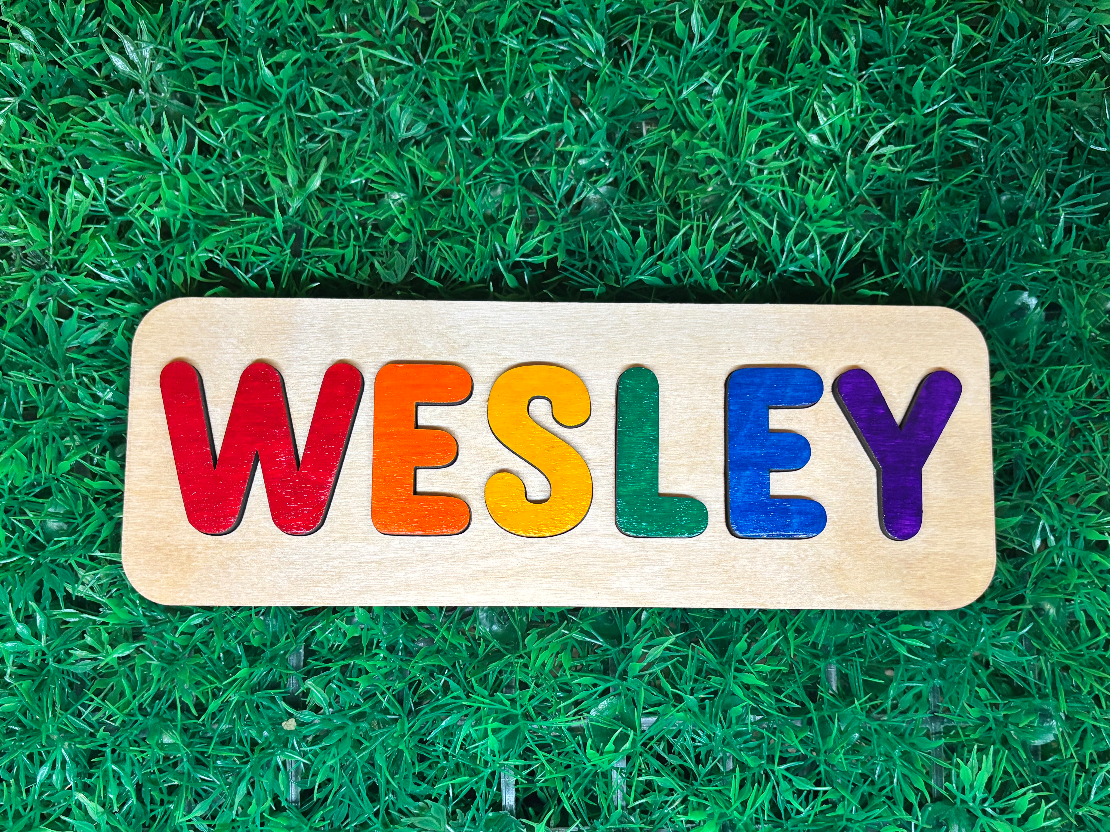
Bold red, green and blue letters spell a single name across a slim wooden tray. The thick pieces are easy for small fingers to grip and lift out, and the bright colour-per-letter scheme helps a preschooler recognise each shape before they can read full words.
Get this design →3. Pastel Name Jigsaw
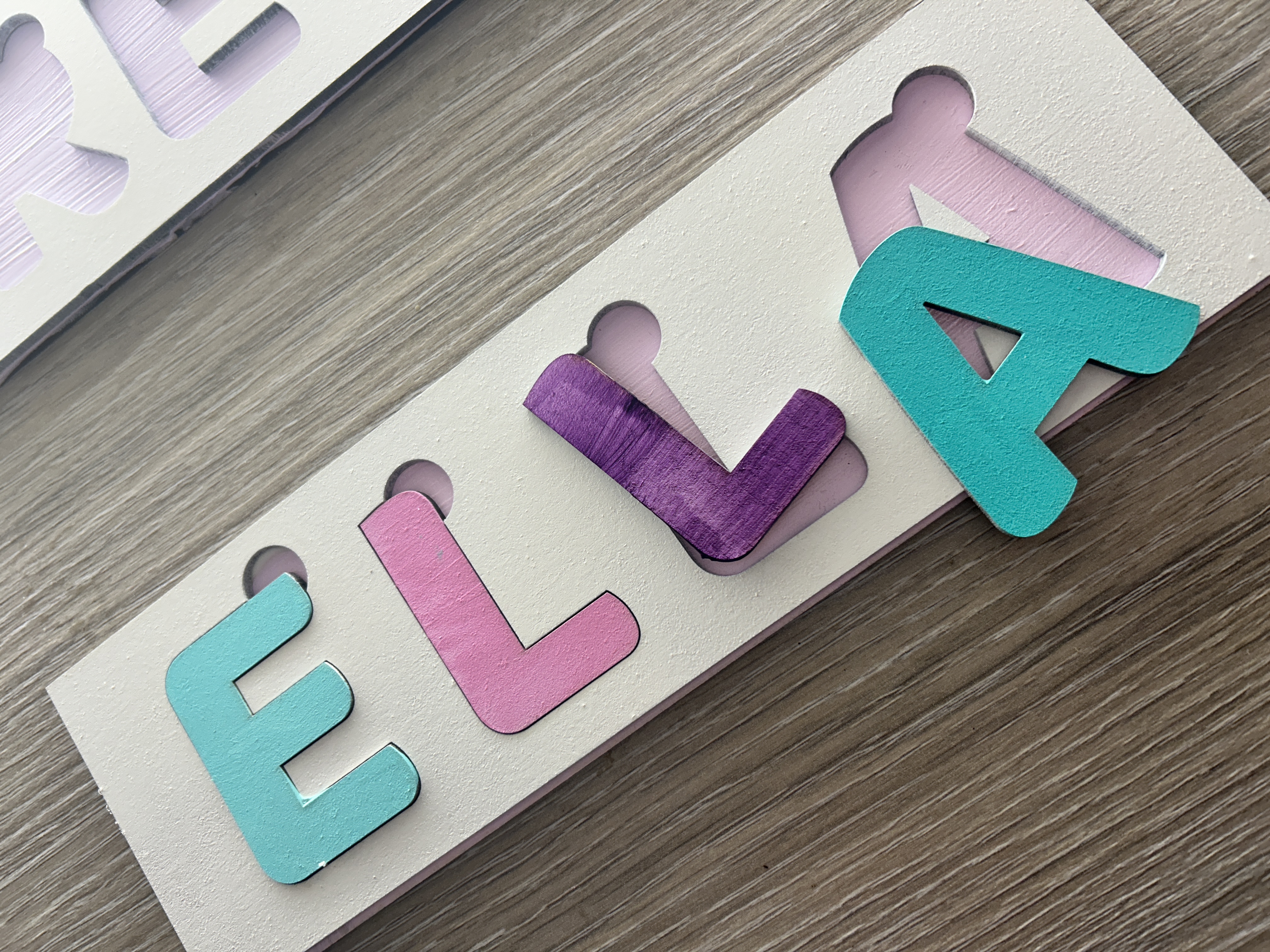
Soft pastel letters stack over a white backing board, with the raised name jigsaw giving the piece a layered, dimensional look. It reads as nursery decor when displayed on a shelf and turns back into a spell-your-name game whenever the letters are popped out to rearrange.
Get this design →4. Name Puzzle with Peg Knobs
Tiny knobs on each letter make this name puzzle friendly for the youngest builders still working on their pincer grip. The name sits in a routed tray so every piece has a home, and the pegs let a toddler lift and place letters without frustration during early spelling practice.
Get this design →5. Layered Cutout Name Puzzle
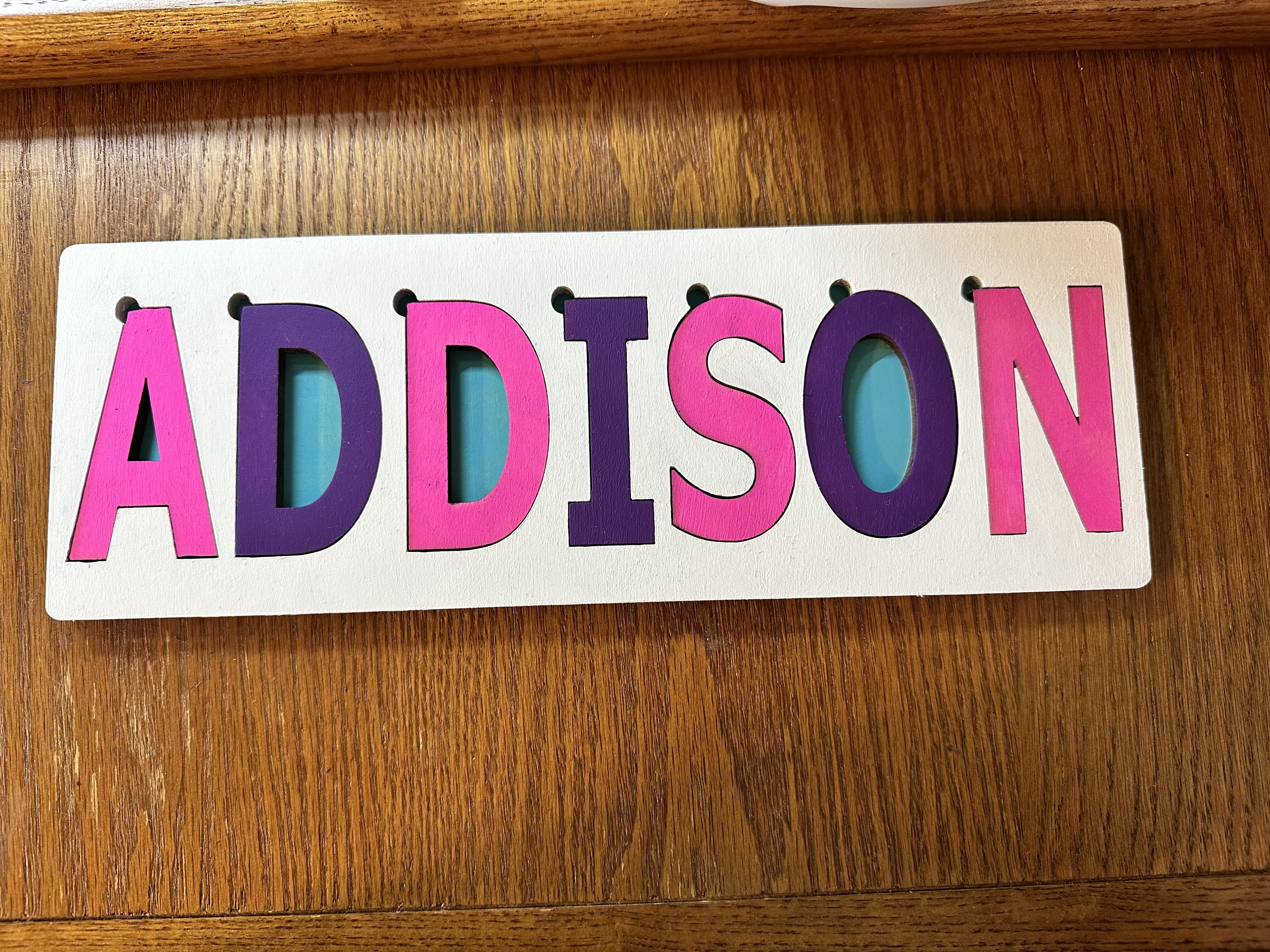
White letters float above a wood-grain base for a clean, two-tone look that suits a modern nursery. The layered construction gives each letter a satisfying lift-out fit, and the neutral palette means it photographs well as a personalised gift or a shelf display between play sessions.
Get this design →6. Totoro-Topped Name Puzzle
This name puzzle pairs colourful spell-out letters with a small painted character topper, so it feels custom to a specific child and their favourite film. Blending a recognisable friend with the child's own name makes the finished piece both a toy and a decor accent for the bedroom shelf.
Get this design →7. Ocean-Blue Name Puzzle
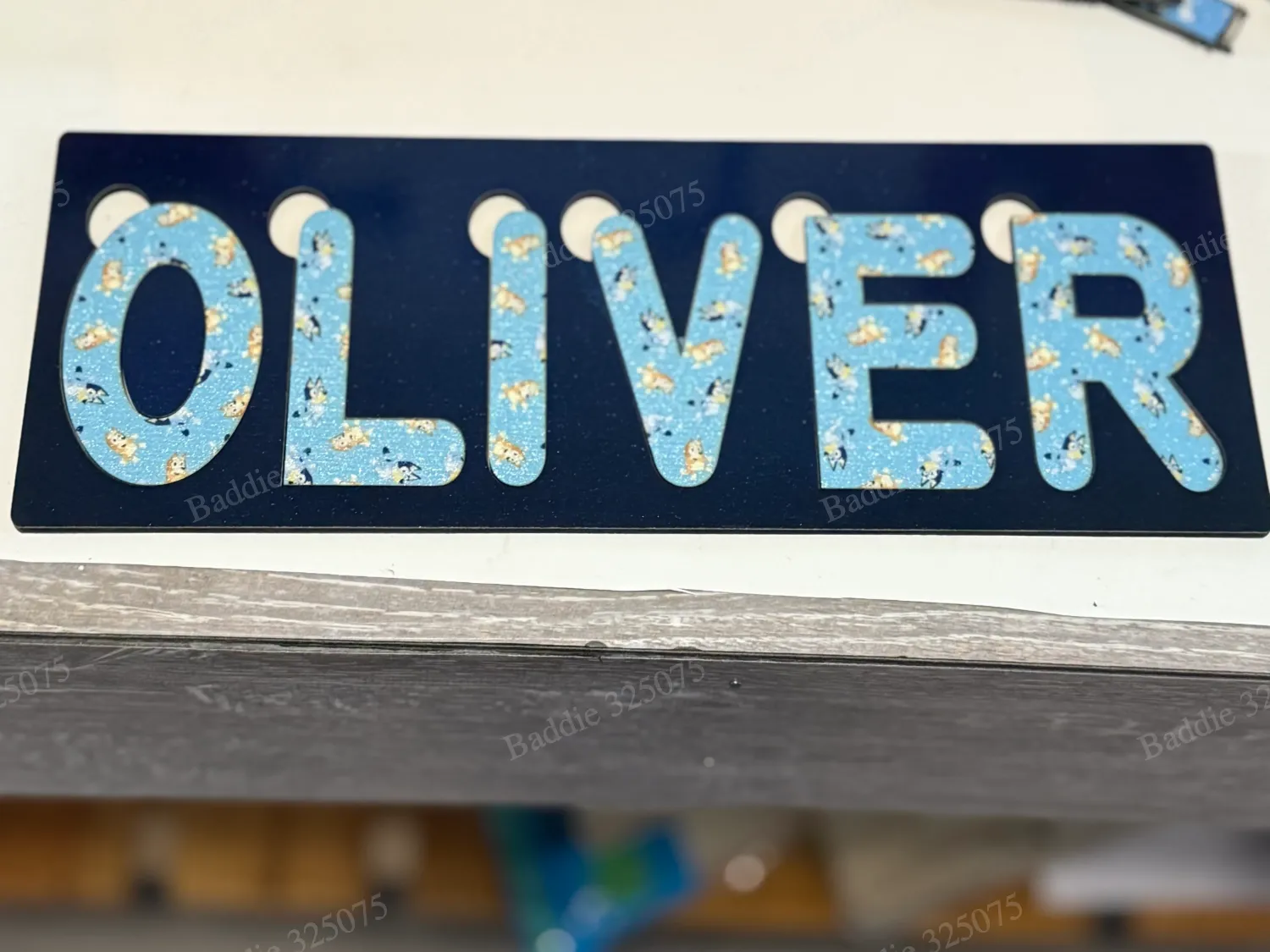
Patterned blue letters give this name puzzle a calm, coastal feel that works for a boy's room or a beach-themed nursery. The letters are hand-finished with dots and swirls, so each one is distinct enough for a young child to sort and reassemble into their name.
Get this design →8. Grandkids' Names Puzzle Set
A set of several name puzzles, one per grandchild, makes a heartfelt gift for grandparents who want every kid represented. Cutting a batch at once keeps the style consistent across names of different lengths, and the pieces store flat so the whole collection travels easily to family visits.
Get this design →9. Easter Egg Name Puzzle
A name spelled across a bright layered egg turns a spring keepsake into a spell-and-play toy. The egg shape frames the letters and gives the piece a clear seasonal hook, so it can sit out as Easter decor and still work as a name puzzle for the youngest guests.
Get this design →10. Space-Themed Name Puzzle
Rockets, planets and a starry backer surround the child's name on this space puzzle, giving letter practice an adventurous theme. The illustrated icons double as extra removable pieces, so a young astronaut can match shapes and spell their name in the same sitting before it goes back on the shelf.
Get this design →11. Name & Number Learning Puzzle
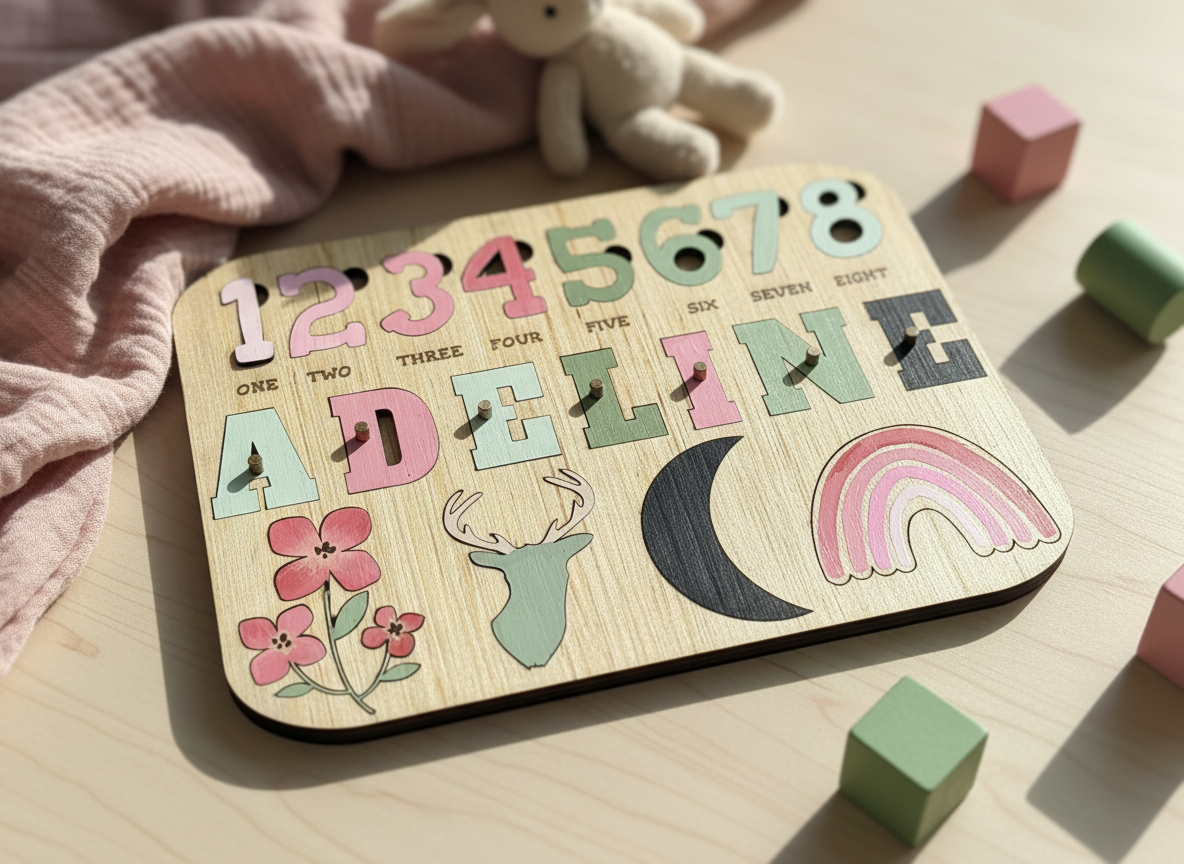
This board combines a personalised name with a row of counting numbers and a few shape icons, so one puzzle covers several early skills. The mixed layout keeps a curious toddler busy longer than letters alone, moving from spelling their name to counting and matching in a single toy.
Get this design →Alphabet and ABC Letter Puzzles
Once a child knows their name, a full A-to-Z board is the natural next step. These alphabet puzzles range from plain lift-out trays to animal-themed jigsaws that build a creature as the letters go in order. Many double as classroom learning puzzles that make preschool letter practice feel like play.
12. Colorful A-to-Z Alphabet Puzzle
The full alphabet sits in a single tray with every letter painted a different colour, giving kids the whole A-to-Z set in one toy. Lifting each letter from its matching slot builds shape recognition, and the rainbow palette makes it easy to call out and find a specific letter during play.
Get this design →13. Affirmation Alphabet Puzzle
Alongside the standard letters, this alphabet set engraves gentle affirmation words like brave and caring beneath each row. It turns letter practice into a small confidence-building moment, so a child hears an encouraging word while they sort and place the wooden letters back into the board.
Get this design →14. Alphabet Letter Construction Puzzle
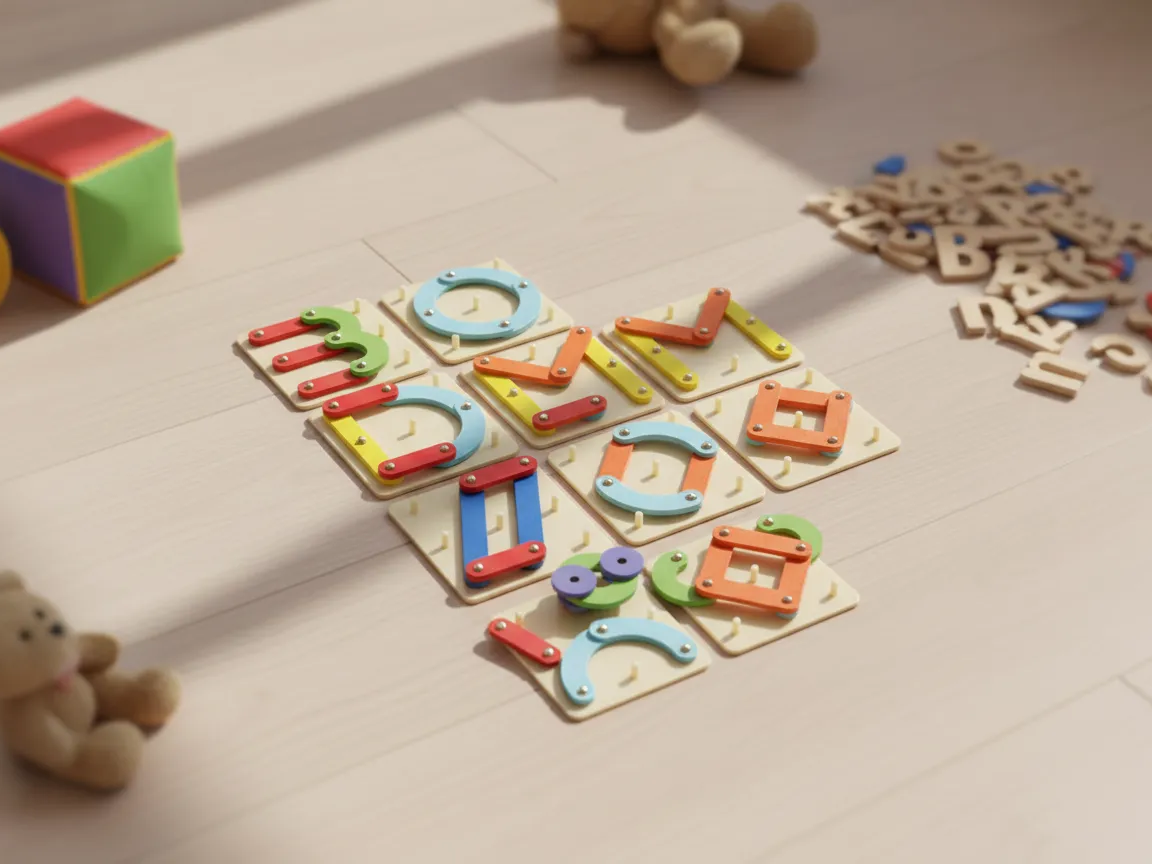
Loose wooden letters scatter across the play mat so a toddler can build the alphabet piece by piece rather than filling a fixed board. The open-ended format encourages free play and early word-building, letting kids line up letters into short words once they have mastered the individual shapes.
Get this design →15. Bright Alphabet Letters Puzzle
Every letter is finished in a punchy colour and set into its own cutout, so the board reads like a cheerful learning chart. The high-contrast letters help a preschooler tell similar shapes apart, and the sturdy pieces stand up to repeated lifting, sorting and reassembling.
Get this design →16. Alphabet Matching Puzzle Board
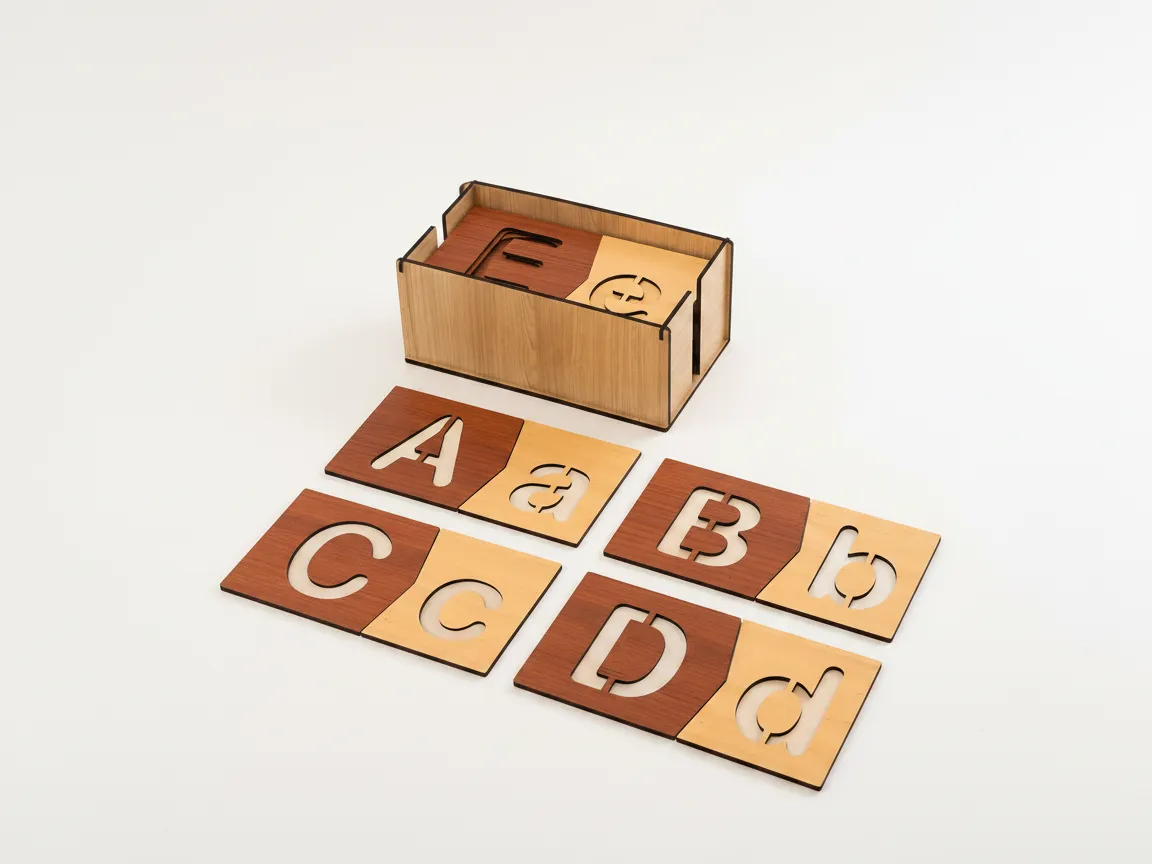
Uppercase and lowercase letters pair up on this Montessori-style matching board, teaching kids that A and a are the same sound. The two-case layout adds a step beyond a plain alphabet tray, making it a natural next puzzle once a child knows their capital letters.
Get this design →17. Raised-Letter Alphabet Puzzle
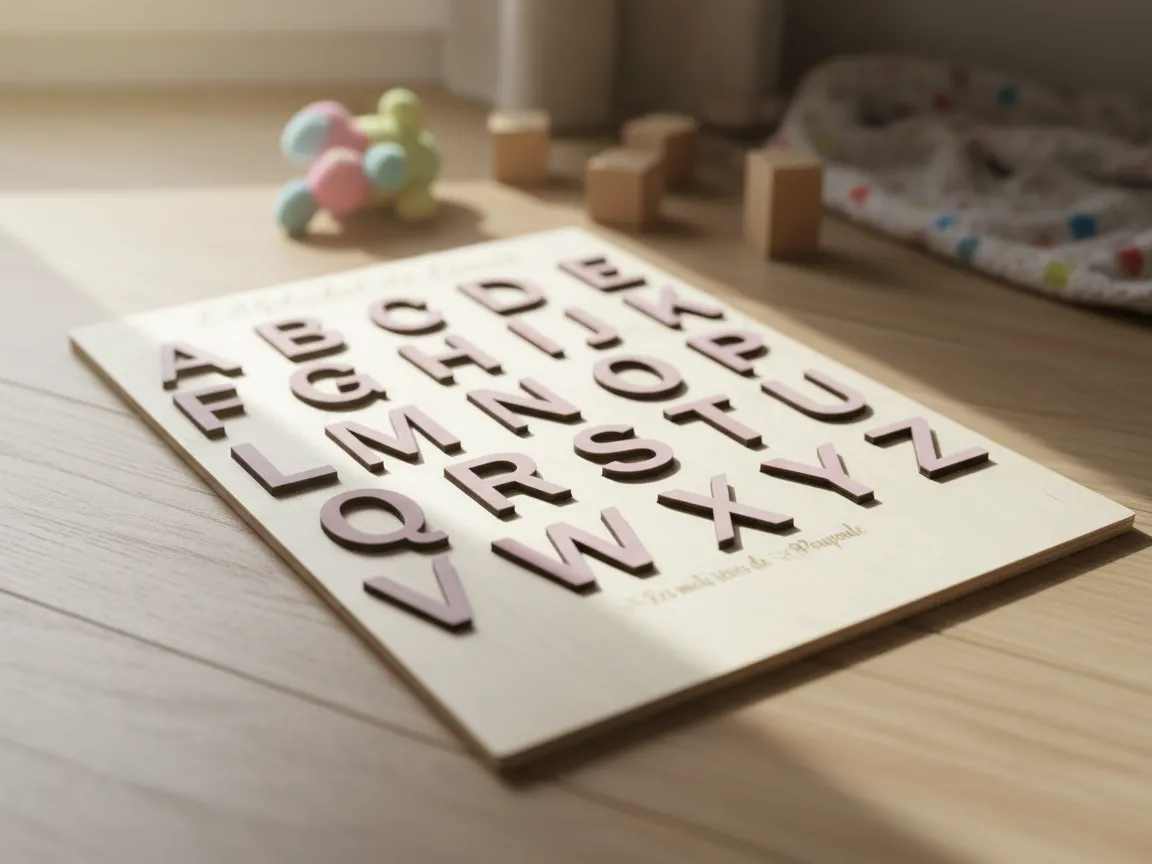
Thick raised letters sit proud of the base board, giving this alphabet puzzle a tactile quality that suits younger children. The dimensional pieces are easy to grab and trace with a fingertip, adding a sensory element to letter learning that a flat printed chart cannot offer.
Get this design →18. A-Z Wooden Learning Puzzle
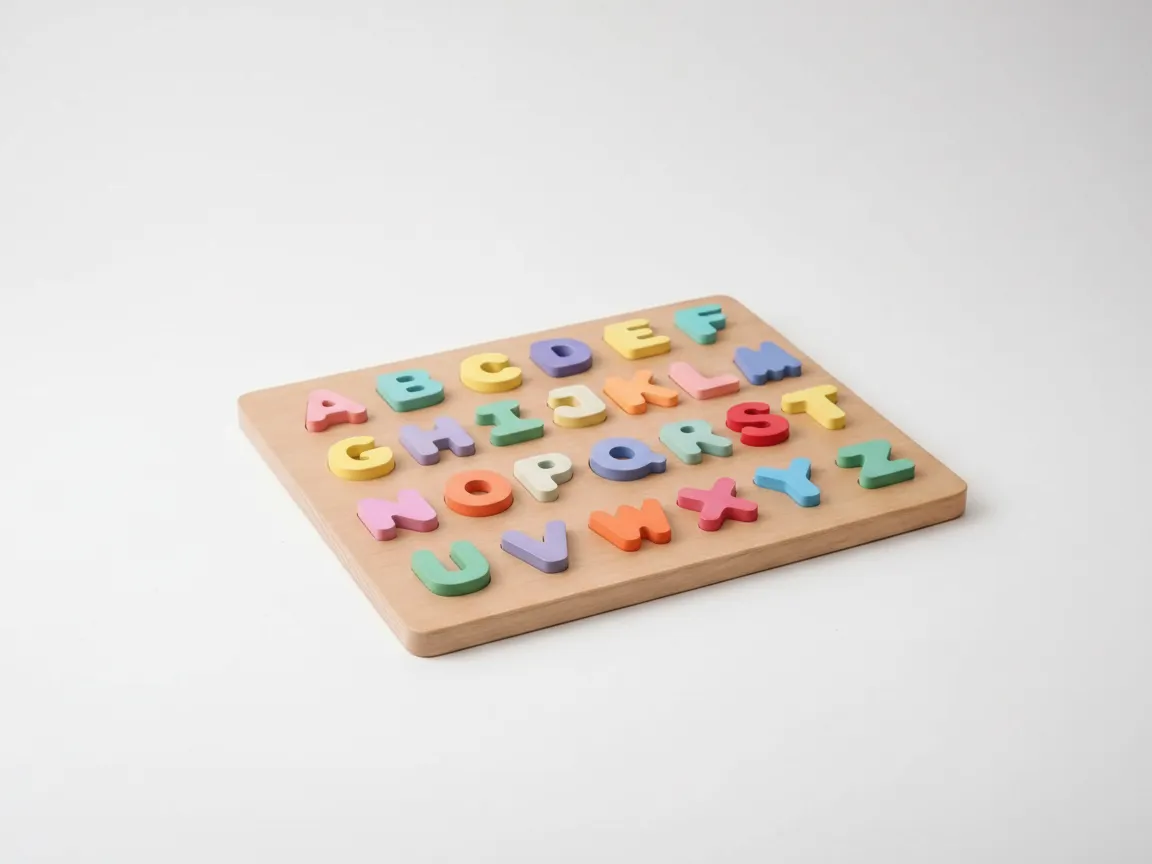
Cut from 3mm stock, this compact A-to-Z board keeps the whole alphabet in a small footprint that fits a play table or travel bag. The tidy grid of letters makes it easy to spot a gap, so kids notice which letter is missing and hunt for the matching piece.
Get this design →19. Rustic Engraved Alphabet Puzzle
This version leans natural, with letters engraved into a warm wood board rather than painted. The uncoated finish gives it a heirloom, Waldorf-style look, and the engraved outlines guide a child's eye as they match each cut letter back into its lightly recessed home.
Get this design →20. Colorful Alphabet Jigsaw
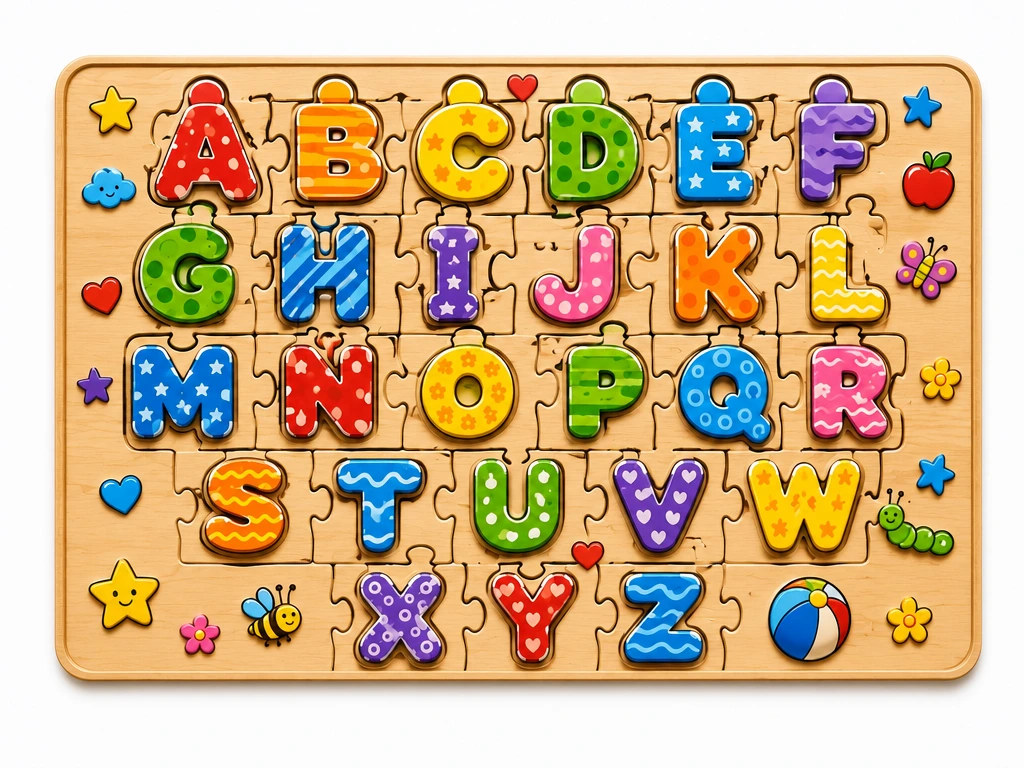
Interlocking jigsaw-style letters mean the pieces connect to each other, not just drop into slots, adding a light spatial challenge to alphabet learning. The bright finish keeps it playful while the connecting edges nudge kids toward putting letters in the right left-to-right order.
Get this design →21. Animal Alphabet Puzzle
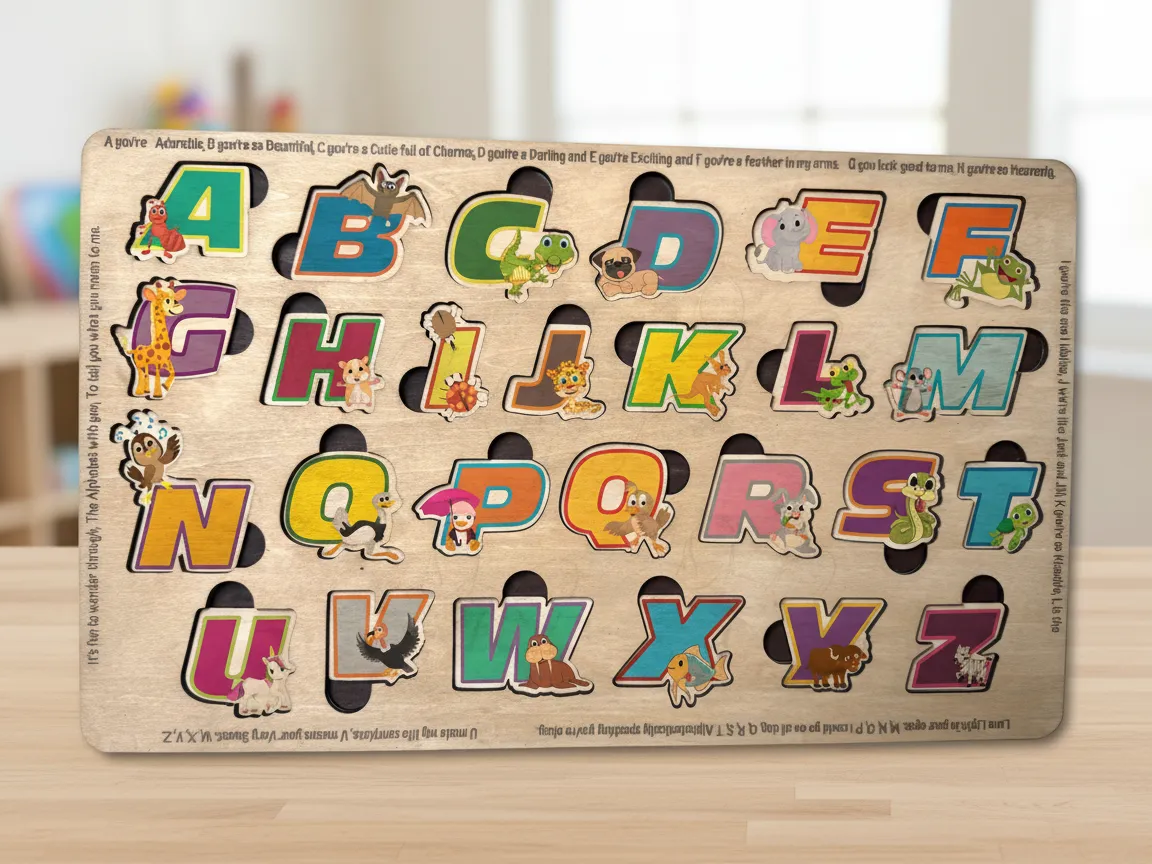
Each letter pairs with a small animal illustration, so A links to a familiar creature and gives kids a picture cue for the sound. Tying letters to animals is a classic phonics trick, and the colourful set keeps early readers engaged as they match sound, shape and image together.
Get this design →22. Snail Alphabet Puzzle
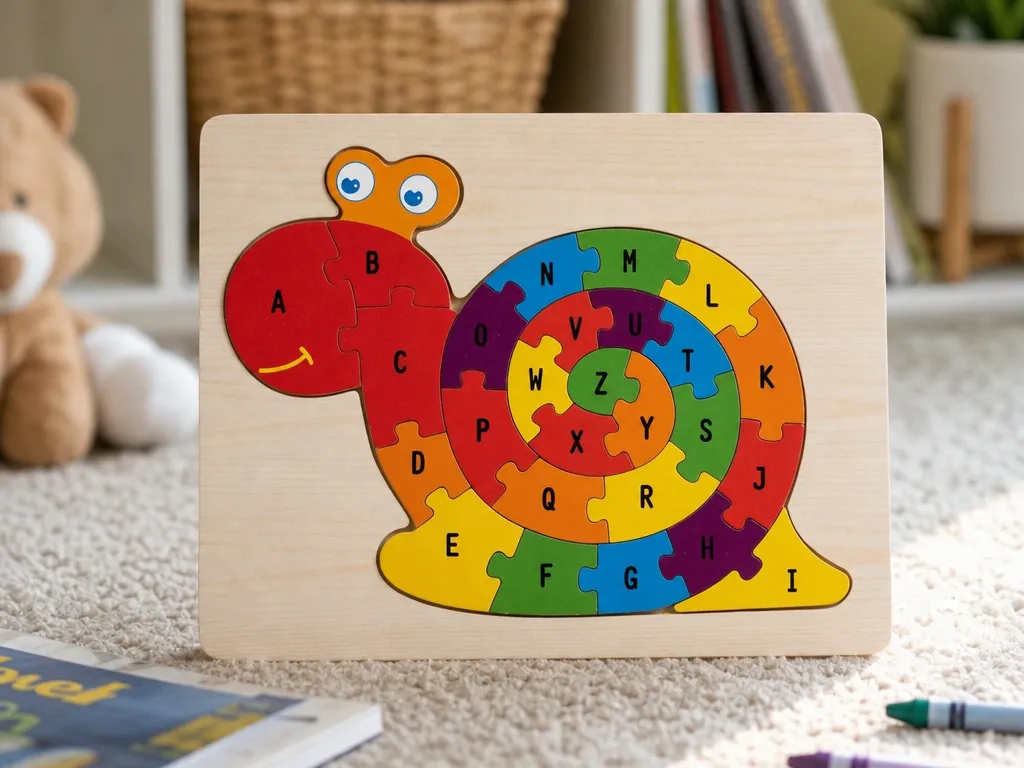
The A-to-Z pieces curl along a friendly snail's shell, so following the alphabet also traces a fun spiral shape. The novelty form makes tidy-up part of the game, since a child has to place the letters in order to complete the snail rather than just fill a plain grid.
Get this design →23. Giraffe Alphabet Jigsaw
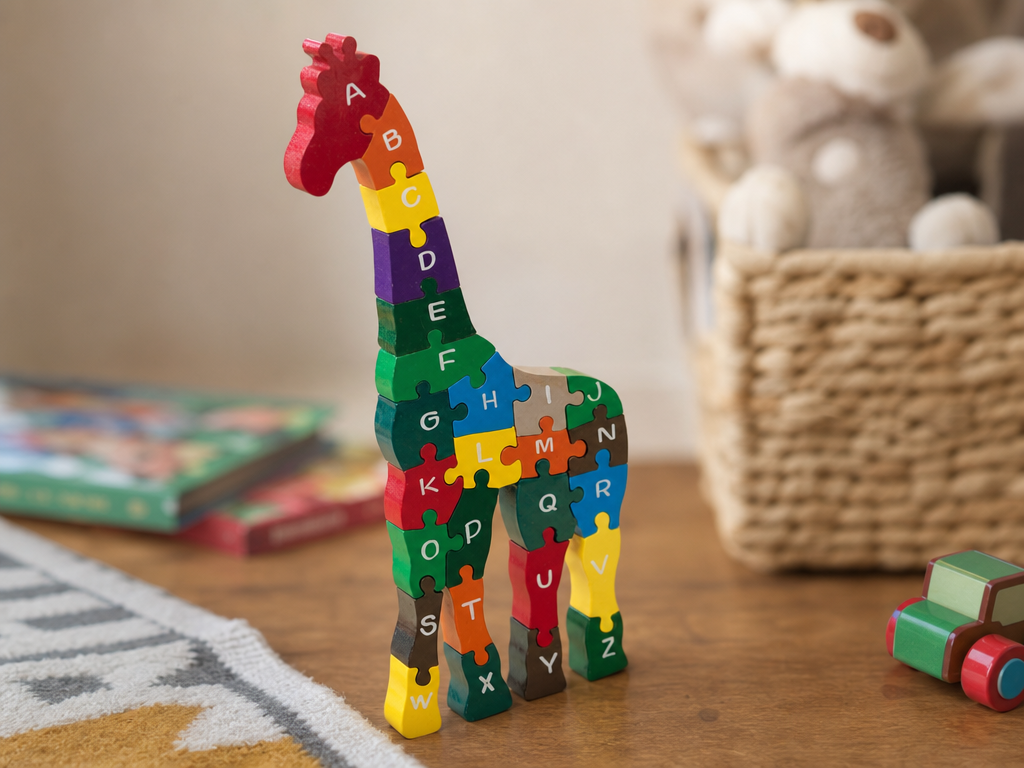
Rainbow letters stack up to build a standing giraffe, combining alphabet order with a satisfying vertical build. Because the animal only stands when the letters line up correctly, kids get instant feedback on their sequencing, turning a plain A-to-Z drill into a small construction challenge.
Get this design →24. Alphabet Car Jigsaw
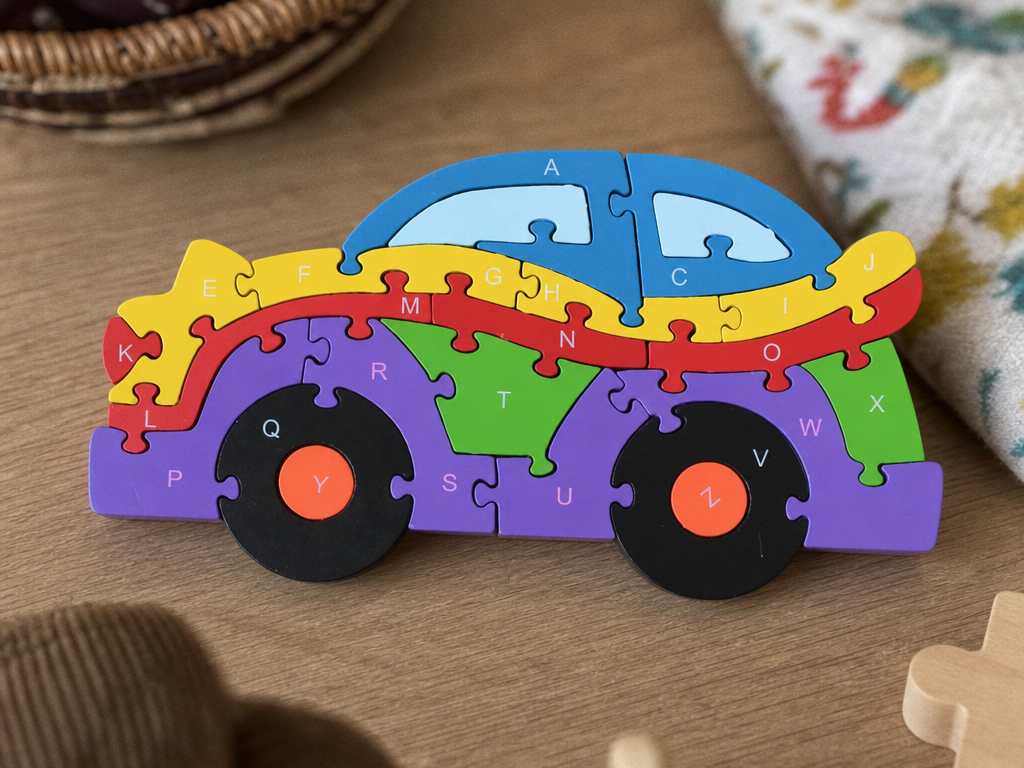
Letters double as the body of a chunky toy car, so vehicle-loving kids get an alphabet puzzle disguised as their favourite thing. Once assembled it rolls and plays like a normal toy, which keeps letter practice appealing to a child who would rather push cars than sit at a board.
Get this design →25. Dinosaur Alphabet Jigsaw
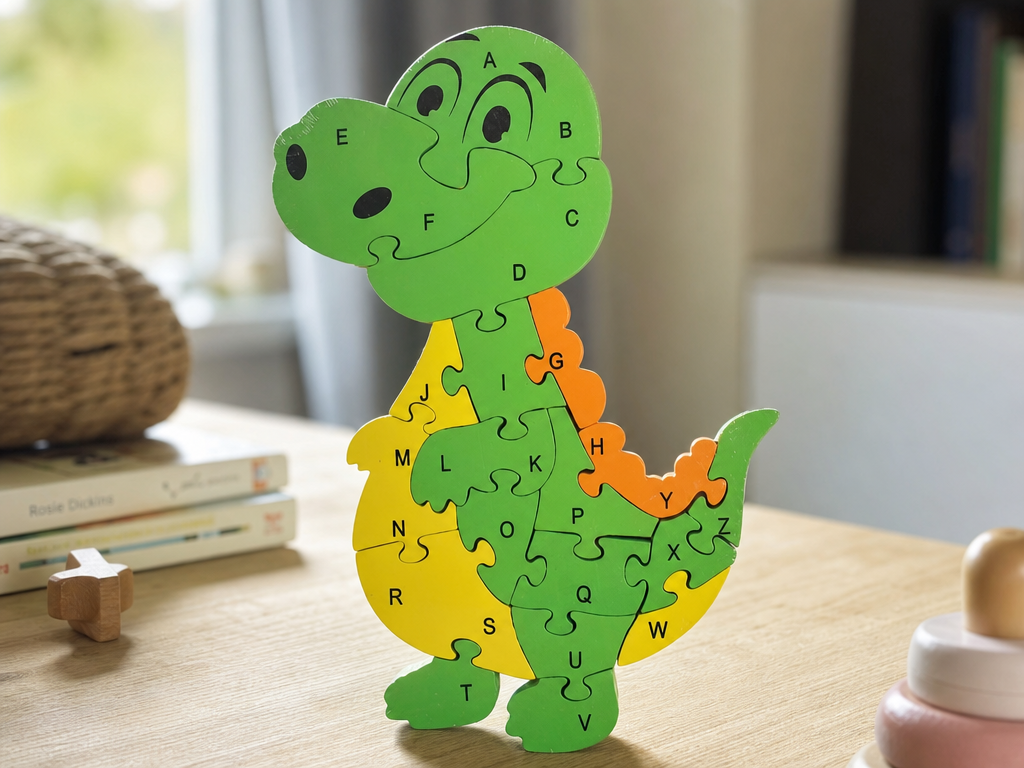
Bright letters assemble into a cheerful dinosaur, marrying alphabet order with a build-a-creature reward. The dino theme is an easy sell for young fans, and the interlocking pieces mean the letters have to go in sequence before the finished character can stand up on the shelf.
Get this design →Spelling and Word Games
This group moves from single letters to whole words. Kids match pictures to their spellings, slide tiles into fill-the-blank trays, or play classic word games like hangman in sturdy wooden form. They turn early literacy into hands-on play and suit tactile learners who need to build a word out loud to remember how it is spelled.
26. Picture-Word Matching Puzzle
This board asks a child to match each printed word to its picture, bridging the gap between reading letters and reading whole words. Everyday nouns like cow and cheese keep the vocabulary familiar, making it a solid early-literacy step up from an alphabet-only puzzle.
Get this design →27. See It Spell It Spelling Game
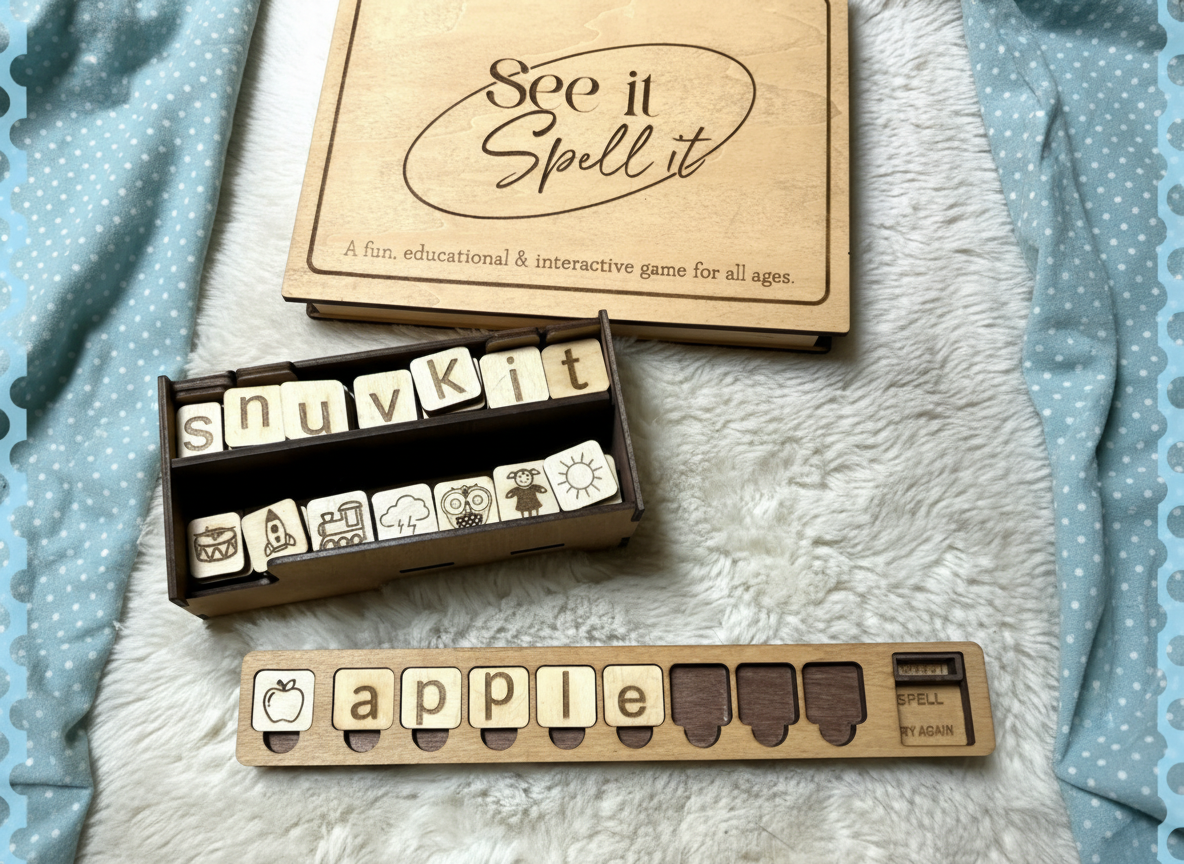
A picture card sits at the top and the player spells the word below it with loose letter tiles, so kids sound out and build the word themselves. Designed with fidget-friendly play in mind, it works well for hands-on learners who need a tactile way to practise spelling.
Get this design →28. Spelling Game Kit with Tiles
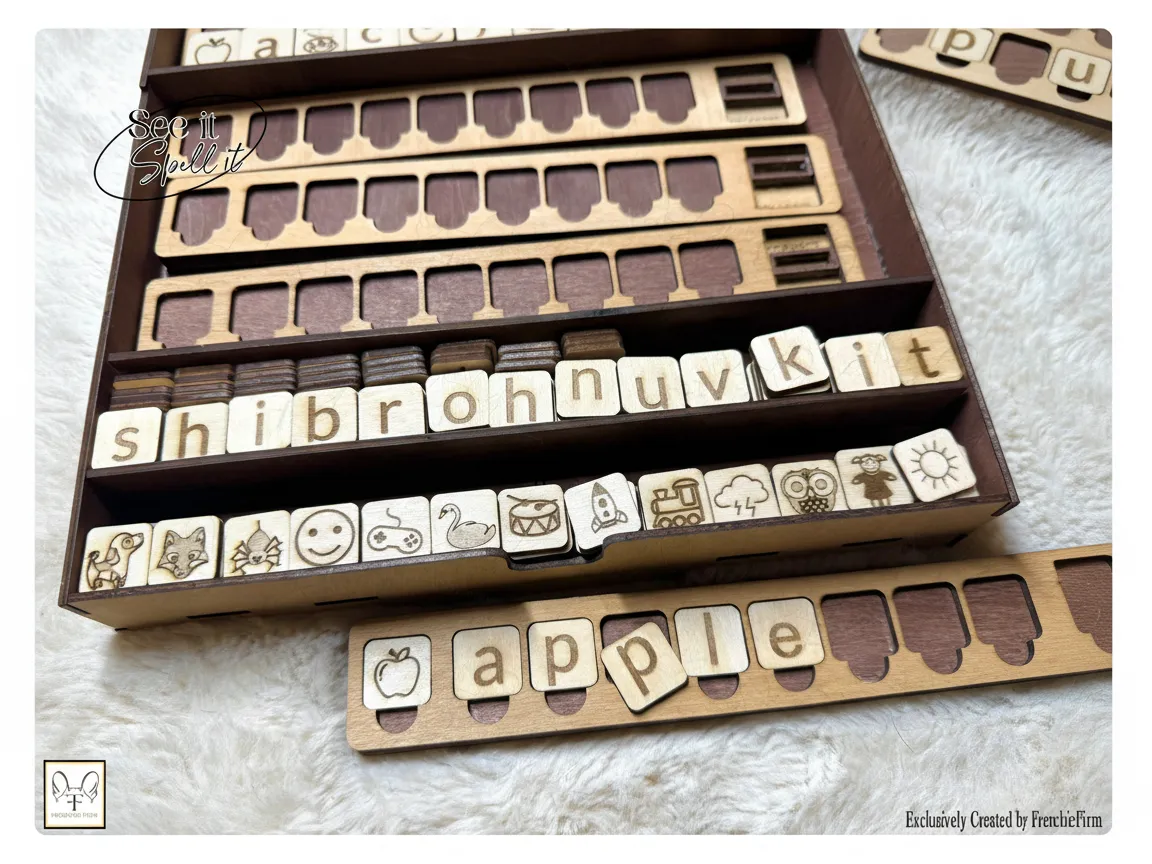
This kit pairs alphabet tiles with icon cards in a slotted tray, so a child slides letters into place to spell the pictured word. Storing the tiles in built-in rails keeps small pieces contained, and the fill-the-blanks format gives clear structure to early spelling drills.
Get this design →29. Letter Tiles for Word Games
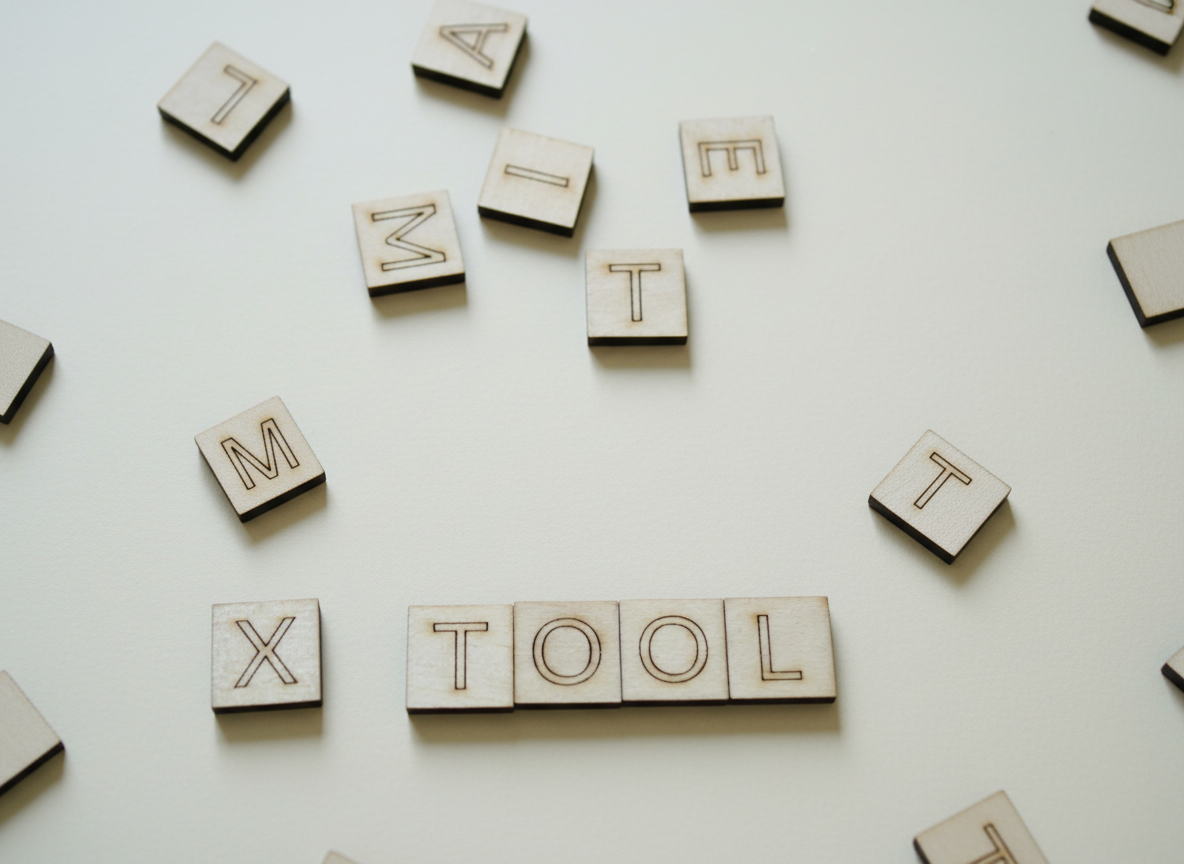
A simple set of engraved letter tiles becomes the building block for countless word games, from spelling races to homemade crosswords. Cutting your own batch lets you choose the wood, size and letter distribution, and a plain tile set adapts to whatever game the family invents next.
Get this design →30. Hangman Alphabet Board Game
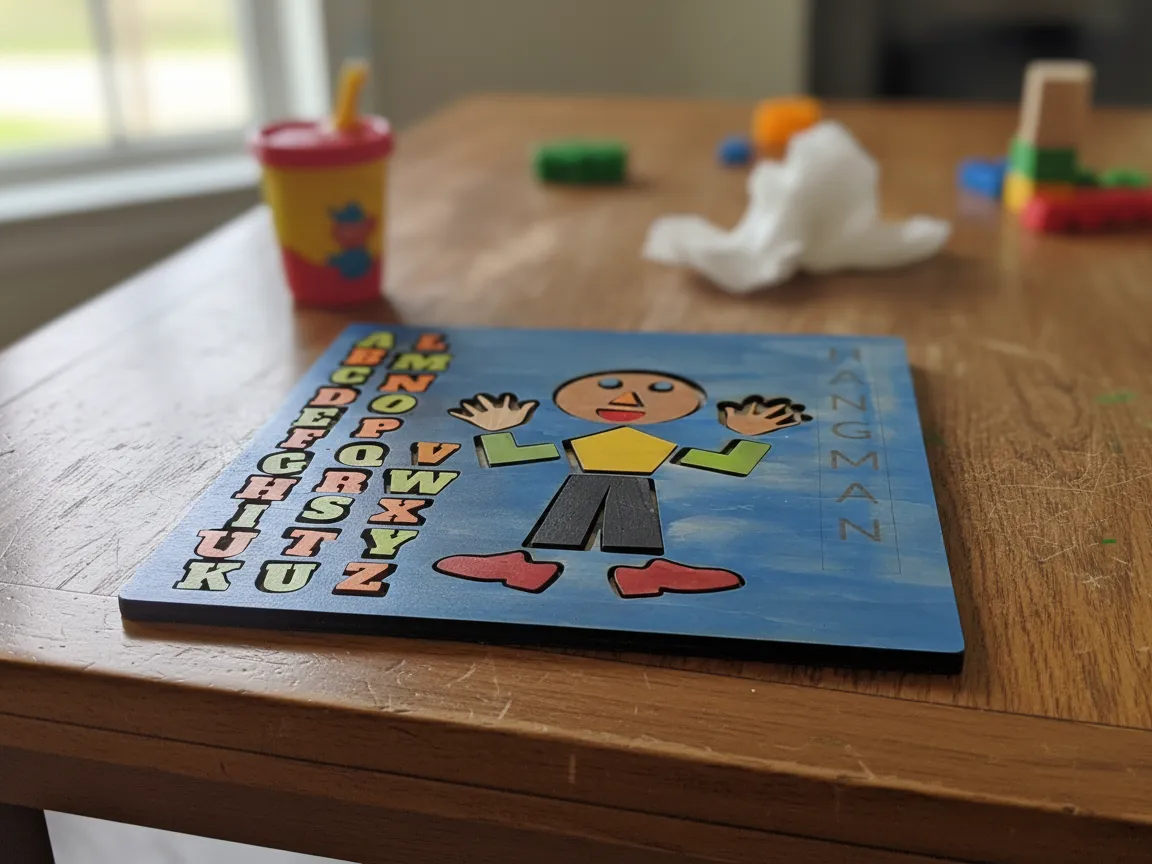
This playful take on hangman gives kids a friendly board and a bank of alphabet pieces to guess letters one at a time. Turning the classic pencil-and-paper game into a reusable wooden set makes it a repeatable word challenge that travels well and never needs a fresh sheet of paper.
Get this design →31. Alphabet Letter Blocks
Stackable cubes carry a letter on each face, so kids can spell words, build towers or hunt for a specific letter. The block format adds a construction angle that flat puzzles lack, and multiple faces mean a small set covers plenty of letters for early word-building play.
Get this design →32. Alphabet Animal Matching Set
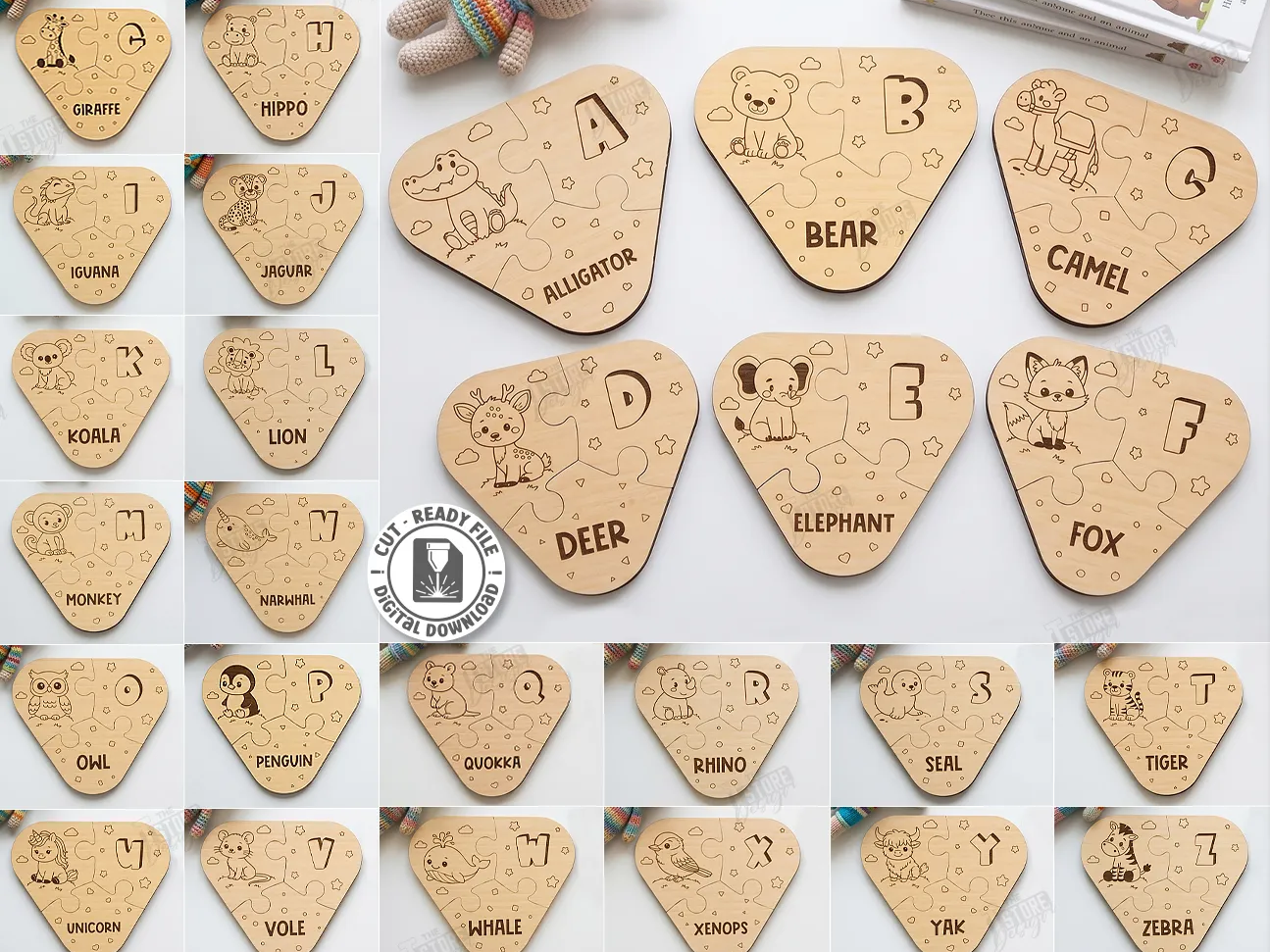
Triangular tiles pair each letter with an animal whose name starts with it, so kids match B to bear or D to deer. The sorting format reinforces beginning sounds, making it a phonics tool as much as a puzzle and a natural companion to a plain alphabet board.
Get this design →33. Letter Construction Peg Board
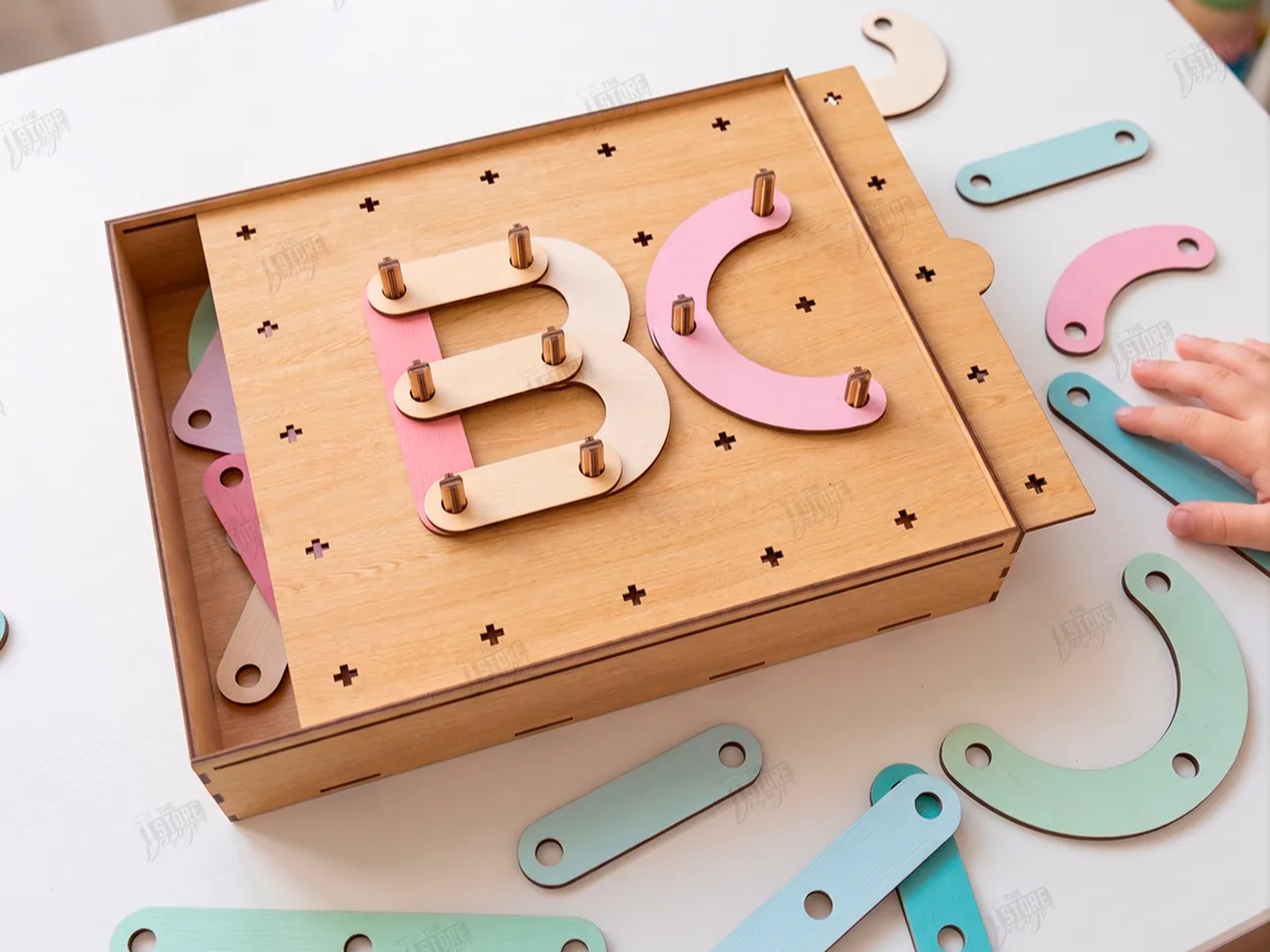
Kids build each letter from smaller peg parts on this Montessori-style board, learning letter shapes by assembling them rather than just placing whole pieces. The construction approach deepens shape recognition and fine-motor control, giving preschoolers a hands-on way to understand how letters are actually formed.
Get this design →34. Alphabet Memory Game
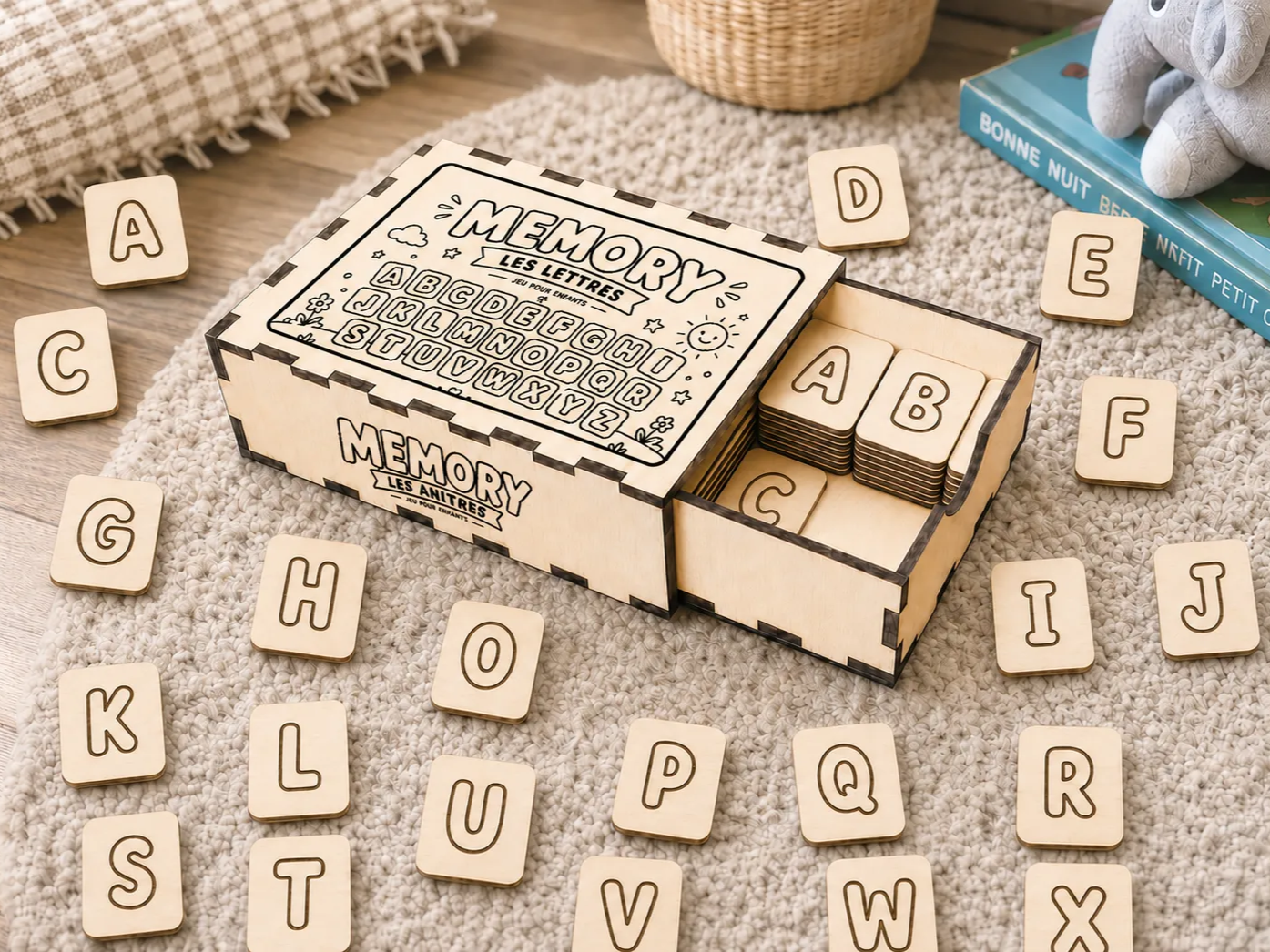
Letter tiles flip and match in this wooden memory game, so kids practise the alphabet while training recall. Playing memory with letters instead of pictures sneaks in extra exposure to each shape, and the boxed set keeps the tiles together for repeat rounds at the table.
Get this design →Scrabble and Crossword Word Art
Word puzzles are not only for kids. This final group covers grown-up favourites: full Scrabble boards ready for game night and crossword-style displays that interlock family names into personalised wall art. They make thoughtful housewarming and wedding gifts, spelling out the people who share a home in the format of a beloved word game.
35. Scrabble Letter Score Board
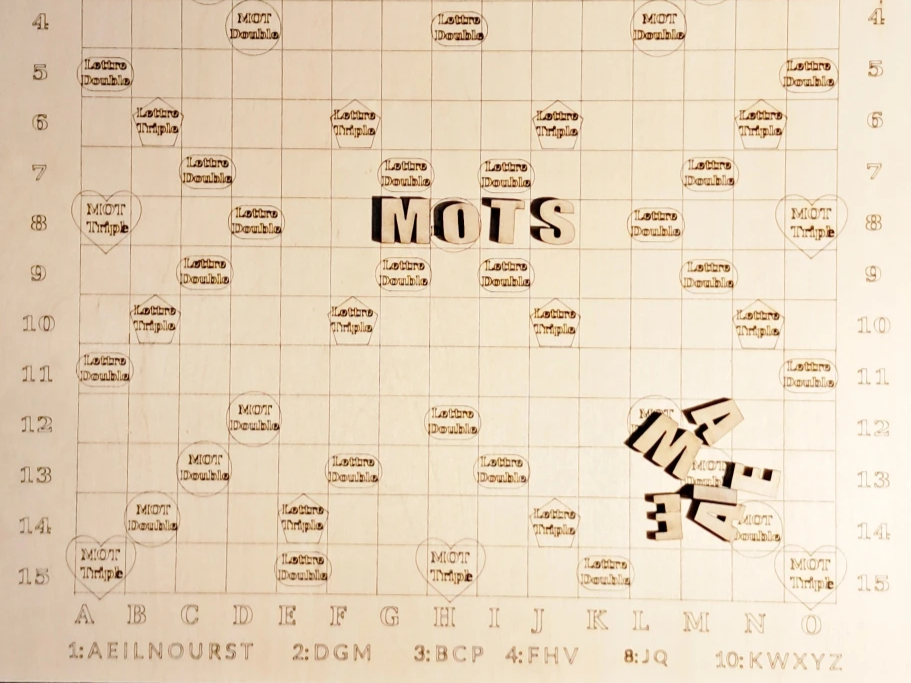
This engraved score board recreates the classic tile-game grid, complete with the double- and triple-word squares that fans know by heart. Pairing the laser-cut board with dimensional letters makes a handsome game night centrepiece and a great gift for the word-game lover who has everything else.
Get this design →36. Wooden Scrabble Board
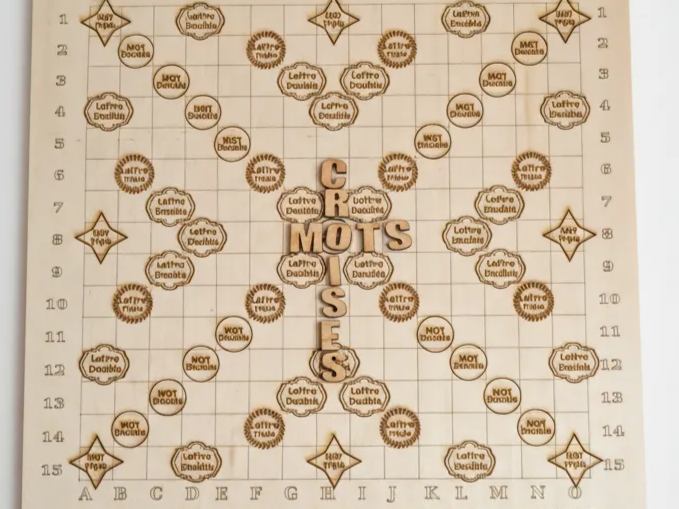
A full wooden take on the tile word game, with an engraved grid ready for a family match. Building the board yourself lets you scale it for a coffee table or a wall, and the natural wood finish gives the familiar game a warmer, more premium look than the boxed original.
Get this design →37. Crossword Family Wall Art
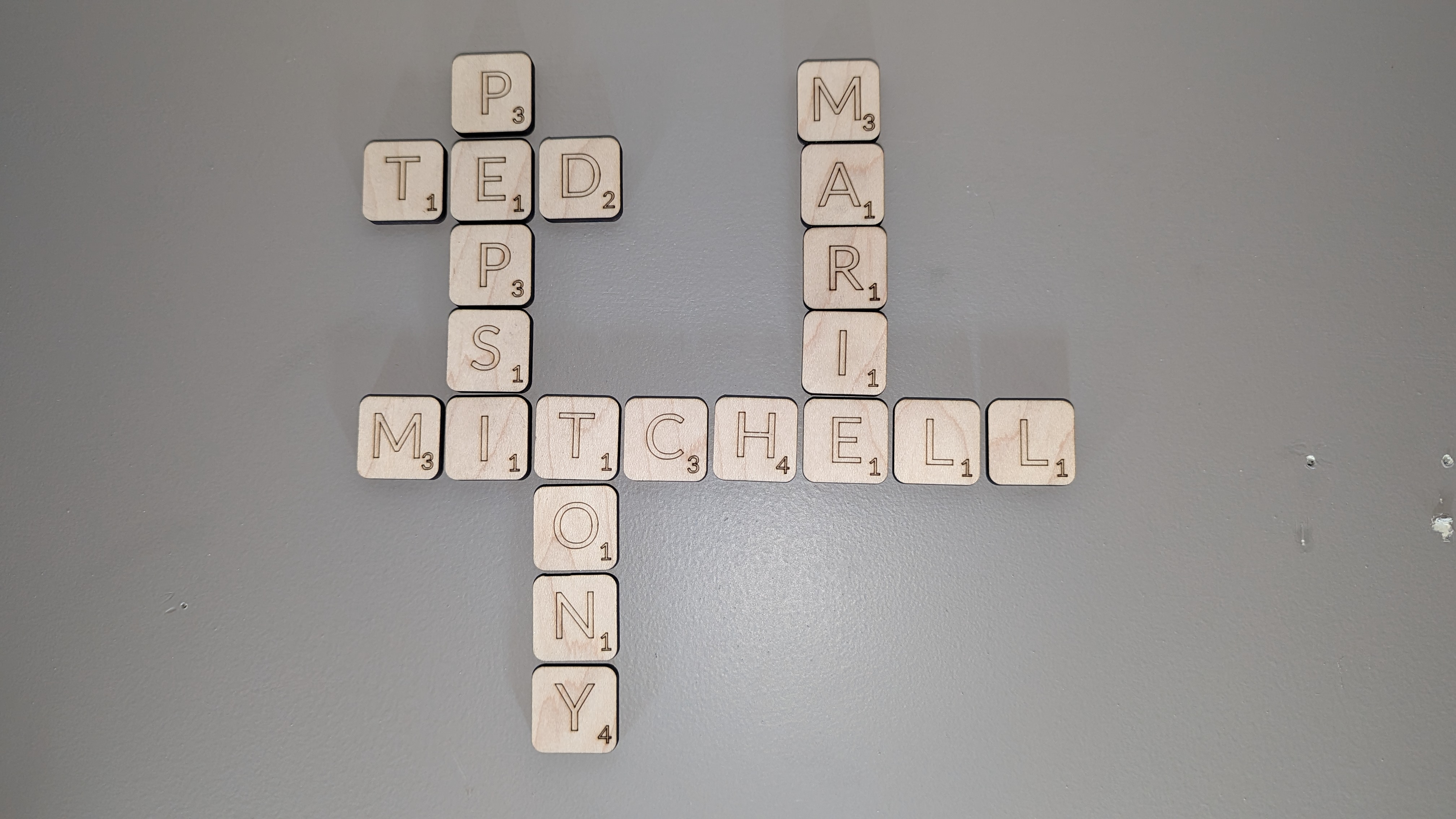
Family names interlock crossword-style so shared letters link one name to the next, turning a word puzzle into a piece of personalised wall art. It is a clever way to display everyone in the household at once, and each name puzzle-fits into the grid like a finished crossword clue.
Get this design →38. Scrabble Family Name Wall Decor
Tile letters spell out family members' names and interlock like a played Scrabble board, mounted as a warm entryway or living-room display. The game-tile styling gives it instant nostalgia, and adding a new name later is as simple as cutting a few extra letters to slot in.
Get this design →39. Crossword Family Ornament
A compact crossword of family names hangs as a round ornament, making a personalised keepsake for a tree or a wall hook. Shrinking the interlocking-name idea down to ornament scale keeps it giftable and seasonal, while still showing every family member linked through their shared letters.
Get this design →40. Family Name Crossword Table Decor
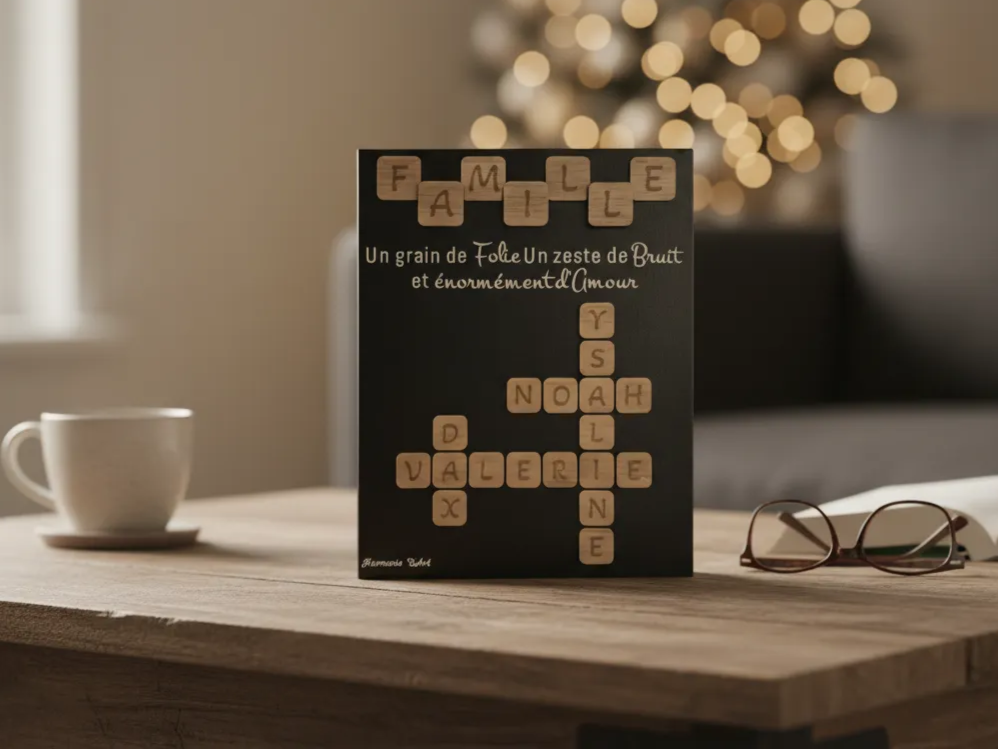
Names cross and connect on a standing wooden plaque built for a shelf or side table. The engraved crossword layout reads as a tidy word grid, and the free-standing format means it needs no wall mounting, making it an easy housewarming or wedding gift for a new household.
Get this design →41. Family Scrabble Tile Wall Art
Framed on a natural board, this piece links each family member's name through shared tiles like a finished Scrabble game. The frame gives it a gallery-ready finish, and the tile-and-score styling makes it a favourite gift for board-game households wanting a personalised wall display.
Get this design →42. Large Scrabble Tile Name Wall Art
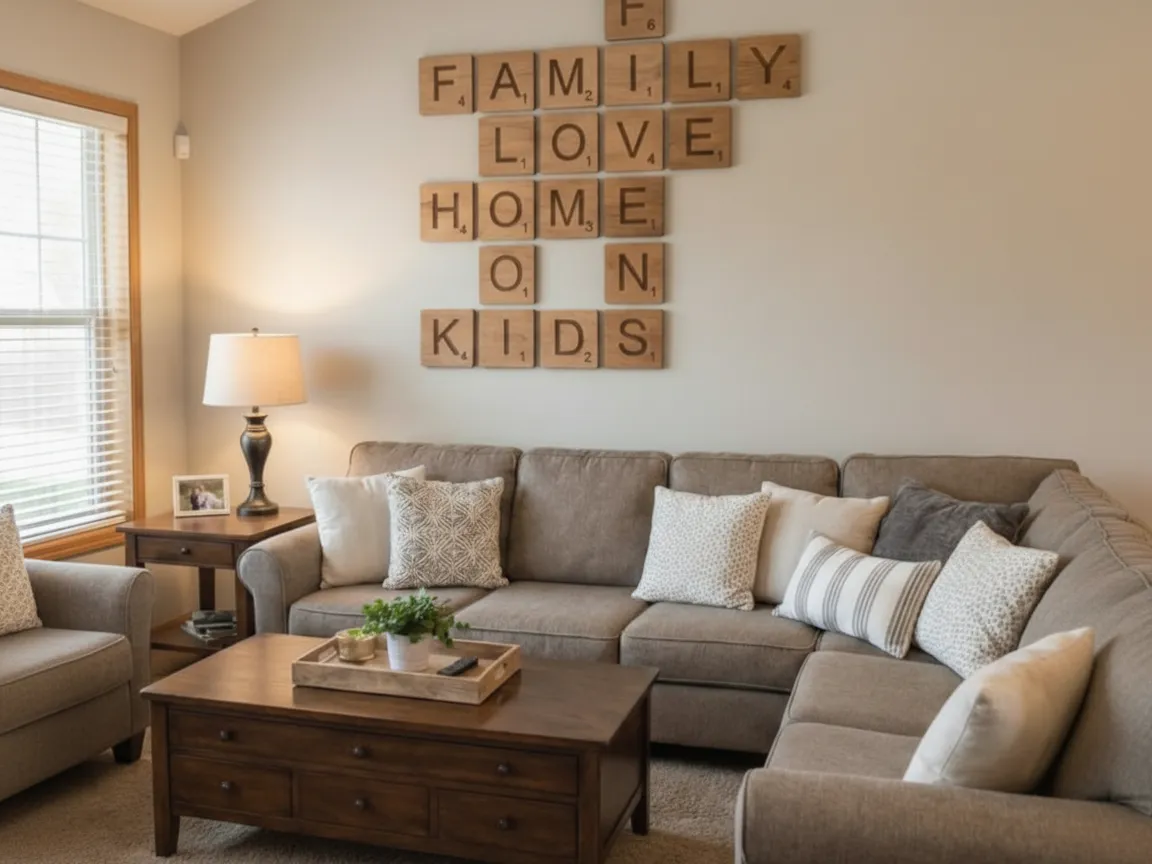
Oversized wooden tiles spell family words like LOVE, HOME and KIDS in an interlocking crossword layout scaled for a feature wall. The big-tile format makes a bold statement above a sofa or bed, and cutting your own lets you choose exactly which words the family wants on display.
Get this design →43. Family Names Scrabble Board
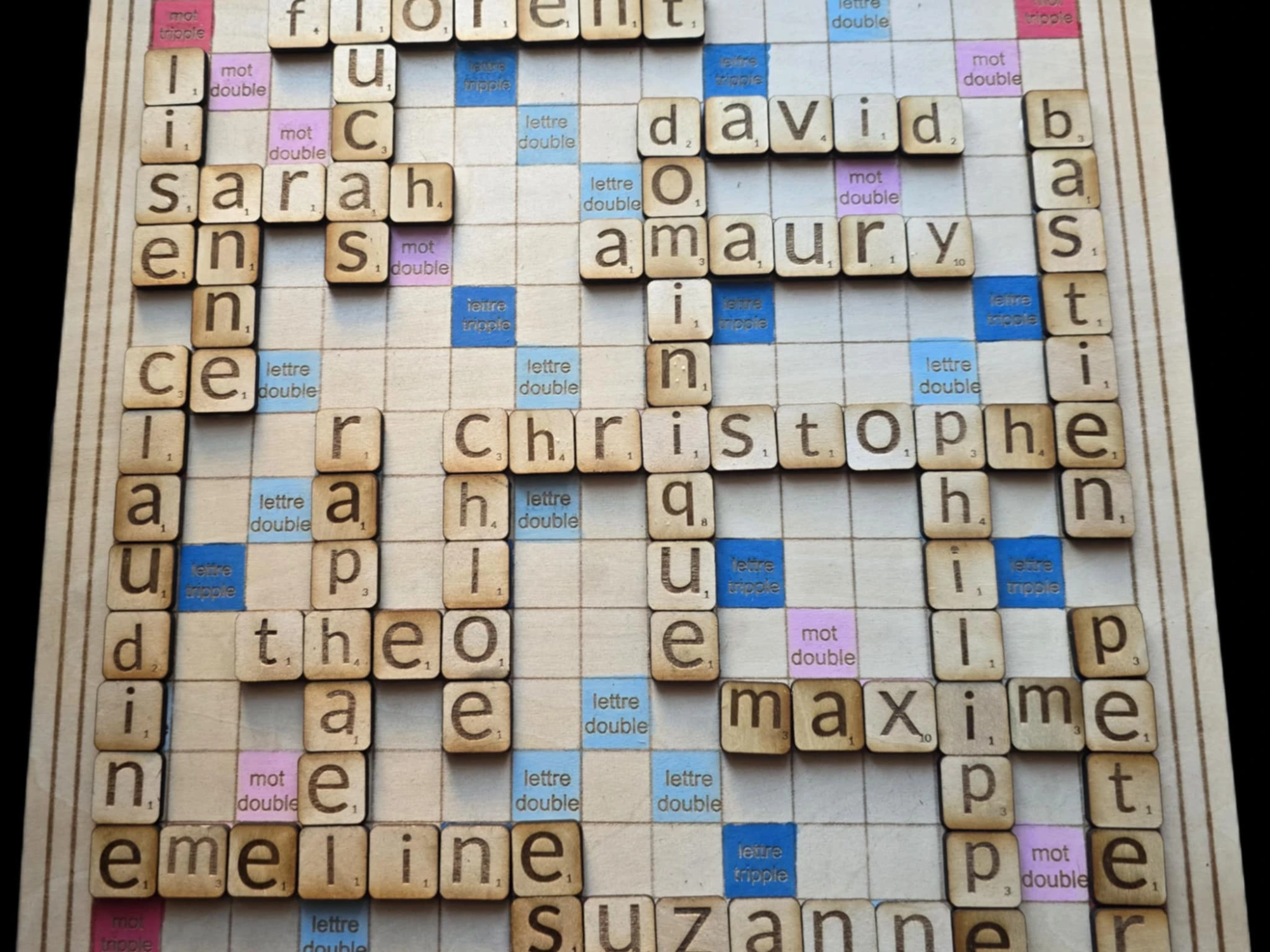
Every family member's name is played onto a full Scrabble grid so the whole household connects through shared letters on one board. It works as both a decorative keepsake and a real playable surface, blurring the line between a family portrait and the word game that inspired it.
Get this design →44. Scrabble Valentine Love Sign
Two names and a date interlock across a small Scrabble-style board, with spare tiles for adding words like LOVE. The customisable layout makes it a romantic keepsake for an anniversary or Valentine's gift, spelling out a couple's story in the format of the word game they might play together.
Get this design →45. Wooden Scrabble Board Game Set
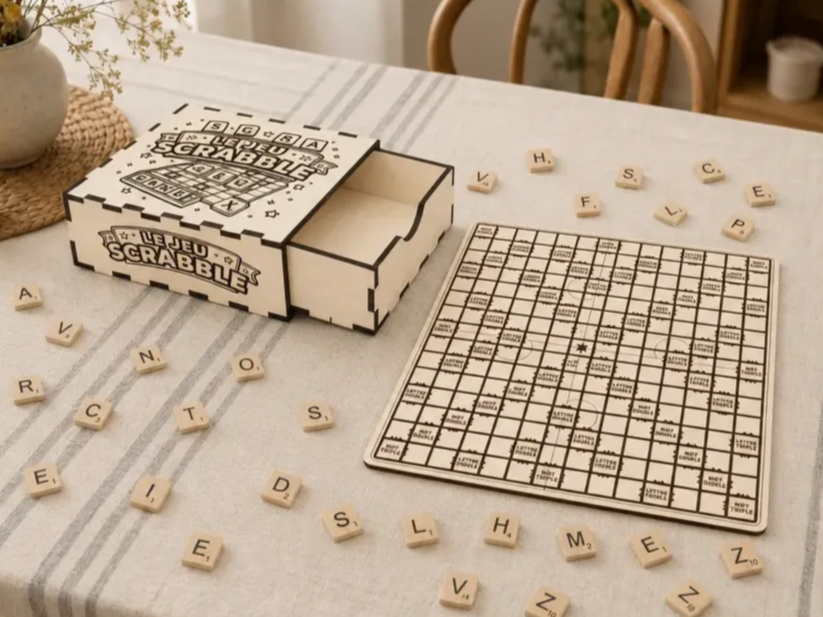
This complete set pairs a laser-cut grid with a batch of letter tiles and a storage box, so the whole word game is ready to play and easy to pack away. Making the full kit yourself means you can gift a polished, boxed board game that looks bought rather than homemade.
Get this design →Final Thoughts
Word puzzles scale with the person you are making them for. A chunky name puzzle helps a two-year-old recognise their own letters, an alphabet jigsaw carries them through preschool, spelling games bridge into reading, and a Scrabble or crossword display gives the whole family a keepsake. Because every design here is a free, editable file, you can swap in any name or word before you cut. If you are new to the format, our walkthrough on how to make laser-cut wooden puzzles covers material choice, kerf and piece fit so your letters lift out cleanly on the first try.
Frequently Asked Questions about Word Puzzle Designs
What is the best material for a laser-cut word puzzle?
Baltic birch plywood in the 3mm to 6mm range is the most popular choice: it cuts cleanly, sands smooth and gives letters a chunky, toddler-friendly thickness. MDF is a cheaper alternative that paints well, while acrylic suits Scrabble tiles and decorative wall pieces. For anything a small child will handle, seal the wood with a non-toxic finish.
How thick should the pieces be for a toddler name puzzle?
Aim for 6mm or thicker for children under three. Thicker letters are easier for small hands to grip and lift, stand up on their own, and are far too big to be a choking hazard. If your stock is thinner, glue two layers together or add peg knobs so little fingers have something to hold.
How do I make letters fit their slots without being too loose or too tight?
Fit comes down to kerf, the tiny amount of material the laser burns away. Cut a quick test letter first, then offset the slot inward by roughly your kerf width (often 0.1 to 0.2mm) so the piece drops in snugly. A slightly loose fit is better than a tight one for young children who get frustrated when pieces jam.
Can I customise a name puzzle with any name?
Yes. Every name and word puzzle here is an editable community file, so you can replace the sample name with your own before cutting. Set the letters in a rounded, chunky font, weld overlapping strokes, and keep the baseboard a little longer than the name so there is room for the outline slots.
What is the difference between a word puzzle and a photo jigsaw?
A word puzzle is built around text: letters, names or whole words are the pieces. A photo jigsaw is a picture cut into interlocking blanks. Word puzzles teach spelling and letter recognition, while photo puzzles focus on the image, so the two suit different gifts and different ages.
Are alphabet puzzles good for teaching kids to read?
They are a strong first step. Matching a letter to its slot builds shape recognition, and boards that pair letters with animals or pictures add early phonics by linking each letter to a sound. Once a child knows the alphabet, spelling games and picture-word matching puzzles bridge naturally into reading whole words.
How do I make a Scrabble-style crossword of family names?
Write out the names and look for shared letters, then interlock them on a grid the way words connect in a crossword. Cut the letters as individual tiles or as one connected piece, engrave the classic tile scores if you want the game look, and mount the finished layout on a backing board for the wall.
What size should letters be for a spelling game?
For a fill-the-blank spelling tray, size the tiles so a full short word fits comfortably in the slot row, usually 25 to 40mm per letter. Keep every tile the same footprint so they are interchangeable, and cut a few spare vowels since words lean on them heavily during play.
Ready to cut your first word puzzle?
Open a free laser-cut puzzle design, swap in your own name or word, and send it straight to your machine.
