
Flip on a black light and a white t-shirt suddenly glows, even though the light itself is invisible. That is the strange part of UV light: you cannot see it, yet it does things visible light cannot — from tanning skin to curing ink solid in under a second.
The short answer:
- UV light sits just past visible violet on the spectrum (roughly 100–400 nanometers), invisible to the human eye.
- It splits into three bands — UVA, UVB, and UVC — each with a different wavelength, behavior, and risk level.
- A “black light” is just a lamp built to emit UVA, which is why certain dyes and whiteners glow under it.
- UV printing uses UV LEDs to cure liquid ink into solid, opaque color almost instantly on wood, metal, acrylic, and more.
- UVC is the shortest, highest-energy band, used for sterilization — and the one that deserves the most caution.
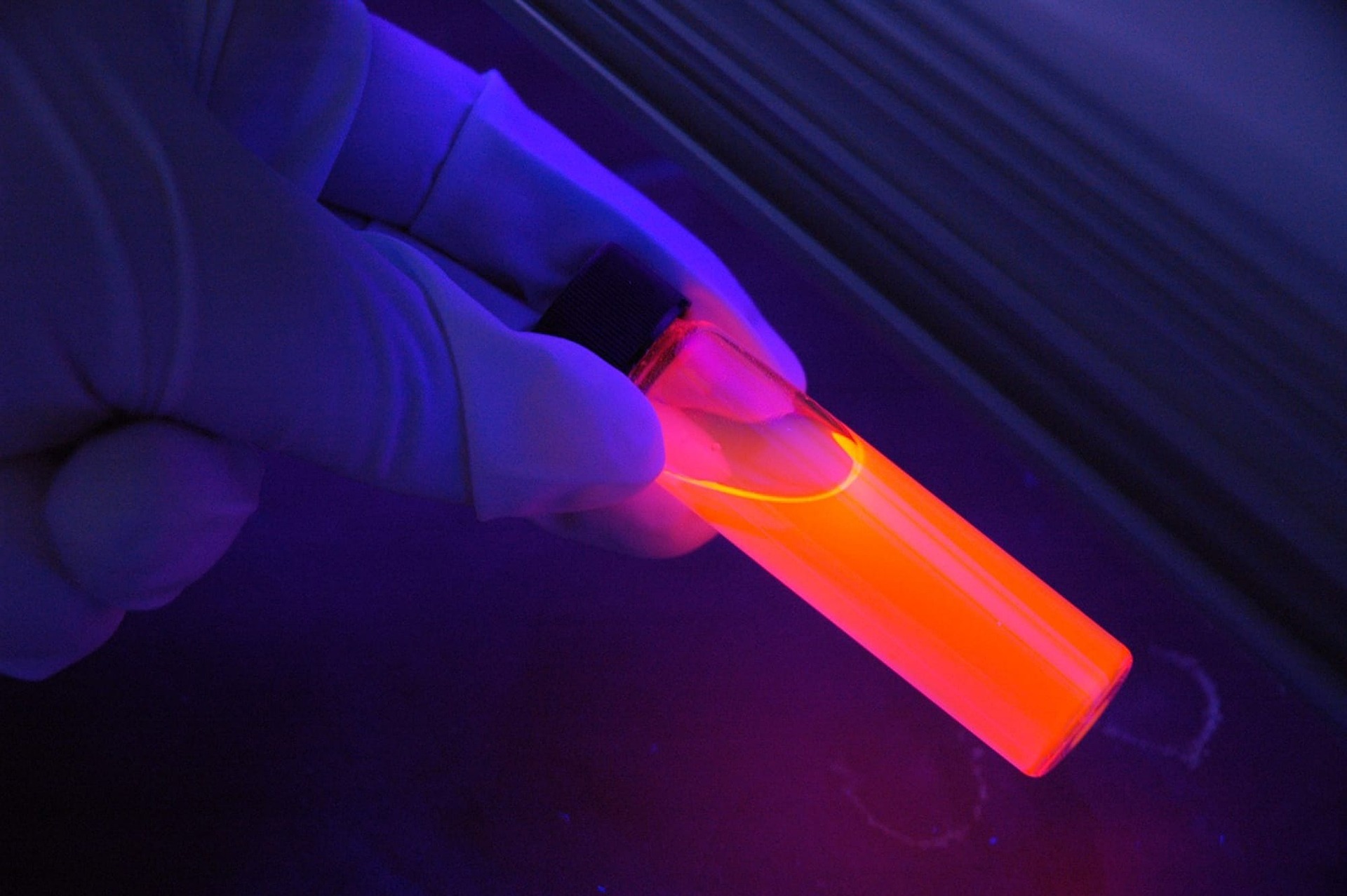
How does UV light work?
Where UV sits on the light spectrum
Light is electromagnetic radiation, and what makes it visible or not comes down to wavelength. Visible light runs from roughly 400 to 700 nanometers — violet at the short end, red at the long end. Ultraviolet light picks up right where violet leaves off, spanning about 100 to 400 nanometers. It is shorter, and therefore higher-energy, than any color your eyes can register, which is exactly why you cannot see it directly.
Why UV light can do things visible light can’t
That higher energy is enough to break chemical bonds, which is why UV light can:
- Tan and burn skin, over minutes or years depending on the band and exposure.
- Bleach dyes and pigments, which is why fabric and prints fade in sunlight.
- Kill microorganisms, the basis for UV sterilization and disinfection.
- Instantly harden liquid resins and inks, the effect UV printers and UV resin art rely on.
UVA vs. UVB vs. UVC: what is the difference?
“UV light” is really shorthand for three distinct bands, split by wavelength:
| Band | Wavelength | Common source | What it is used for | Caution level |
|---|---|---|---|---|
| UVA | 315–400 nm | Black lights, sunlight, most UV-curing LEDs | Glow effects, curing UV inks and resins, skin aging over time | Lowest of the three, but still not harmless with prolonged exposure |
| UVB | 280–315 nm | Sunlight | Tanning, vitamin D production in skin, sunburn | Moderate — the main band responsible for sunburn |
| UVC | 100–280 nm | Germicidal lamps, purpose-built sterilizing LEDs | Disinfection, sterilizing water and surfaces | Highest — can damage skin and eyes within minutes of direct exposure |
Almost all of the sun’s UVC and most of its UVB is filtered out by the atmosphere before it reaches the ground, which is why UVA dominates everyday exposure — and why most consumer UV lamps (black lights, UV-curing lamps, nail lamps) are built to emit UVA rather than the more dangerous UVB or UVC bands.
What is a black light?

A black light is simply a lamp built to emit mostly UVA, filtered so almost none of the visible light gets through — that is why the bulb itself looks dim purple instead of bright white. When that UVA hits certain materials, they fluoresce, absorbing the invisible UV and re-emitting it as visible light. Common examples include:
- Optical whiteners in white fabric
- Some minerals and gemstones
- Tonic water, thanks to the quinine in it
- Many highlighter inks and stage makeup
The glow you see is not the black light itself; it is the object converting invisible energy into visible color.
What is UV printing?

In the maker and print world, UV printing is a direct-to-object printing method: a printhead jets liquid, pigment-based ink onto a surface, and In the maker and print world, UV printing is a direct-to-object printing method: a printhead jets liquid, pigment-based ink onto a surface, and a UV LED lamp built into the same carriage cures that ink solid within a fraction of a second, layer by layer. (Full color from any printer, UV or otherwise, usually comes down to the same trick — tiny dots faking shades that aren't really there.). Because the ink hardens instantly instead of soaking in, UV printing works without the pretreatment regular inkjet printing needs, directly onto surfaces like:
- Wood
- Metal
- Acrylic
- Leather
- Glass
- Ceramic
- Phone cases
It also lays down opaque white and can build up thin layers of ink, which is why UV prints can include textured, slightly raised detail instead of a flat, absorbed-in image.
How to do UV printing
The workflow is largely the same whether the machine is a dedicated print-only UV printer or a combo device:
- Prepare the design in the printer’s software, including any white underlayer, color layers, or raised-texture settings.
- Load the object onto the print bed or into a jig that holds it flat and steady.
- Send the print. The printhead passes over the object, jetting UV-curable ink layer by layer.
- UV LEDs cure each pass instantly, so the printer can stack white, color, and clear layers without waiting for anything to air-dry.
- Remove the finished piece — it is dry and ready to handle, package, or sell the moment it leaves the machine.
What is a UV printer?
A UV printer is the machine that does this: a print head moves across the object jetting UV-curable ink, and a UV LED lamp built into the same carriage hardens each pass before the next one prints on top. That instant cure is what lets a UV printer build opaque white, full color, and even raised texture on objects a normal inkjet printer could never handle — bottles, phone cases, coins, wood signs, ceramic tiles.
Many UV printers are print-only machines, but combo devices like the xTool F2 Ultra UV pair a 5W UV laser with a built-in UV printer in the same enclosure. That means That means a maker can cut, engrave, or do 3D inner engraving on crystal and glass, then print full-color artwork on the same piece without moving it to a second machine — dual 48MP cameras and one-click 2D-to-3D handle the alignment automatically. (That inner-crystal engraving is its own craft — our 3D laser engraving tutorial walks through building the model and dialing in the carve.), then print full-color artwork on the same piece without moving it to a second machine — dual 48MP cameras and one-click 2D-to-3D handle the alignment automatically.

What is UV DTF printing?
UV DTF (direct-to-film) is a related but different process: instead of printing straight onto the final object, a UV printer prints the design onto a special film with a UV-cured adhesive layer, and that film is then peeled and transferred onto the final surface like a sticker.
It trades a little of direct UV printing’s durability for a lot of flexibility, since the printed film can be applied to surfaces a printer bed cannot physically hold, such as:
- Curved tumblers and bottles
- Car panels and helmets
- Oversized or uneven surfaces
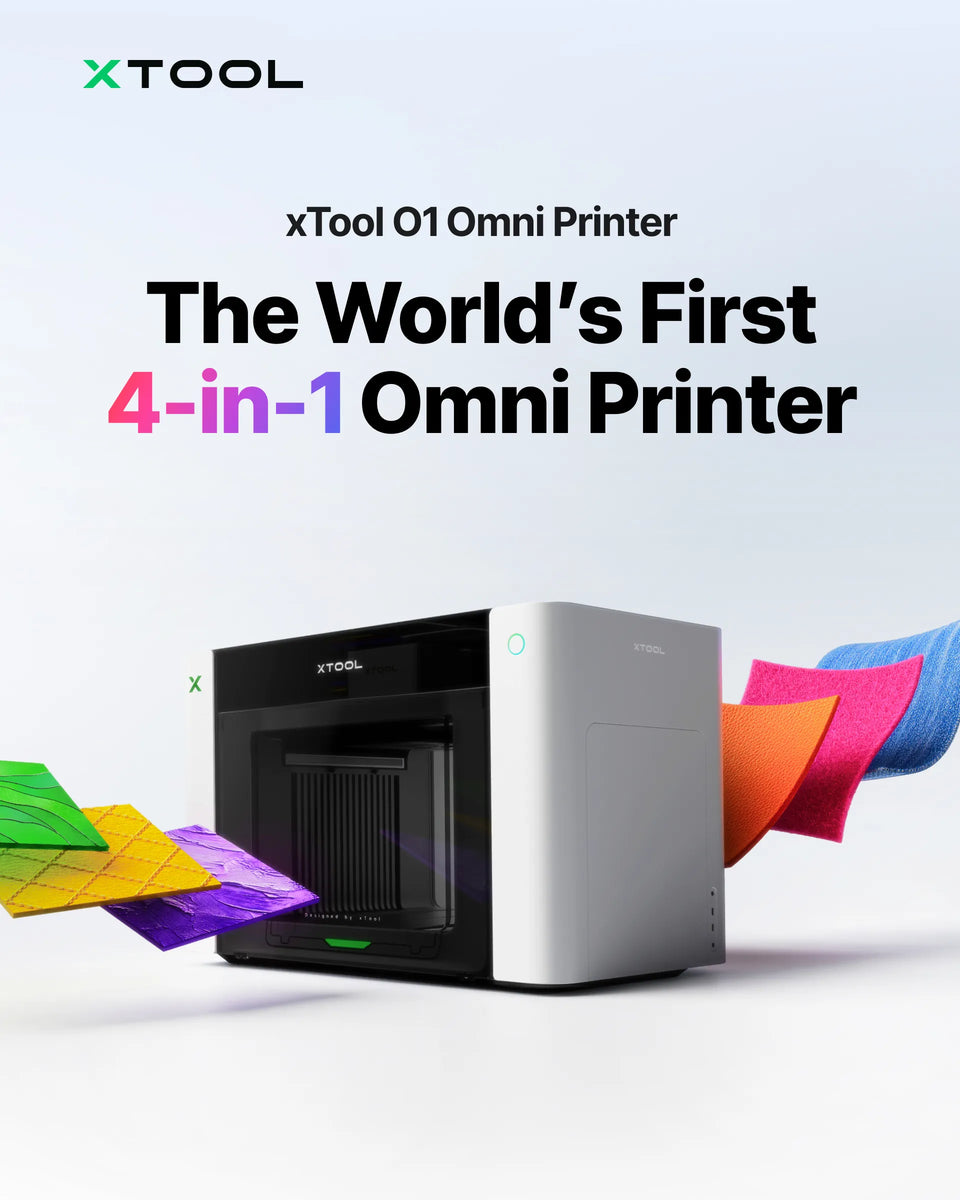
Purpose-built machines are starting to bring this whole workflow into one device: the xTool O1 Omni Printer pairs UV printing with a roll feeder and laminator, so it can output up to 49 ft (15 m) of seamless UV DTF transfer film in a single run — enough to batch-produce custom stickers, packaging labels, and branded decals without printing and applying each one by hand.
Why UV light matters for makers
UV resin and UV-cure adhesives
Beyond printing, UV light is the curing mechanism behind UV resin art and UV-cure adhesives — both stay liquid until hit with the right wavelength, then set hard in seconds under a UV lamp or direct sunlight.
UV safety precautions
That same energy is worth respecting:
- Enclosed UV printers and cured resin are safe to handle once the ink or resin has set.
- Raw UV lamps and uncured resin should stay away from bare skin and eyes.
- UVB and UVC sources deserve the most caution — UV-blocking glasses are standard practice around any open UV light source.
UV-Printed Design Examples to Try
UV printing shows up everywhere once you know what to look for — these community designs show the range across metal, plastic, wood, and more. Each is a real file you can open and make for free.
1. Double-Sided Commemorative Coin
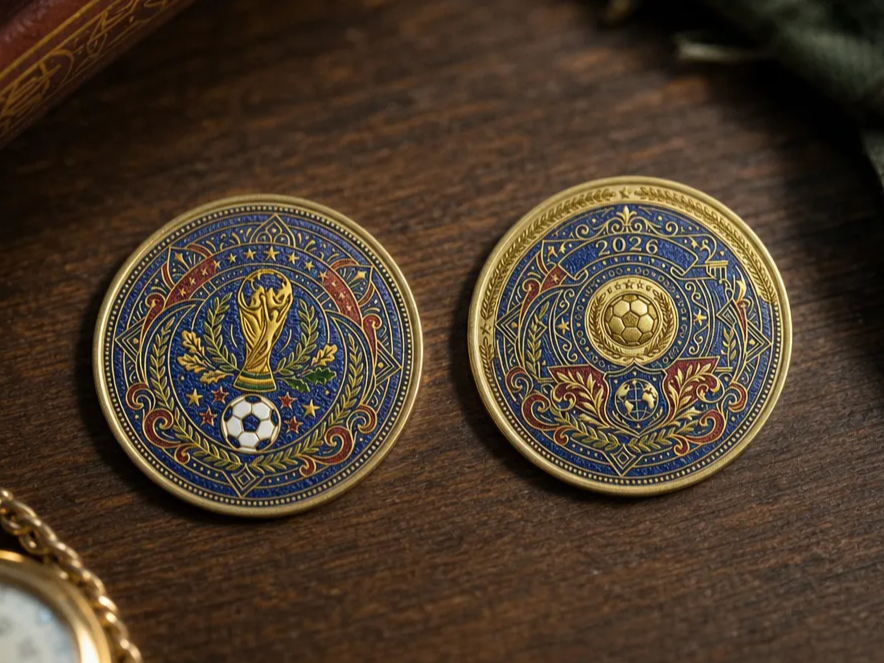
- Material: Brass alloy
- Process: UV printing (direct-to-metal)
- Type: Coin / Collectible
- Machine: xTool O1 Omni Printer
Full color on bare metal is one of UV printing’s signature tricks — this coin’s fine linework and gradient shading print directly onto brass with no paint or fill needed on either face. Browse more custom coin designs in the xTool community.
2. Textured Rhinestone-Effect Phone Case
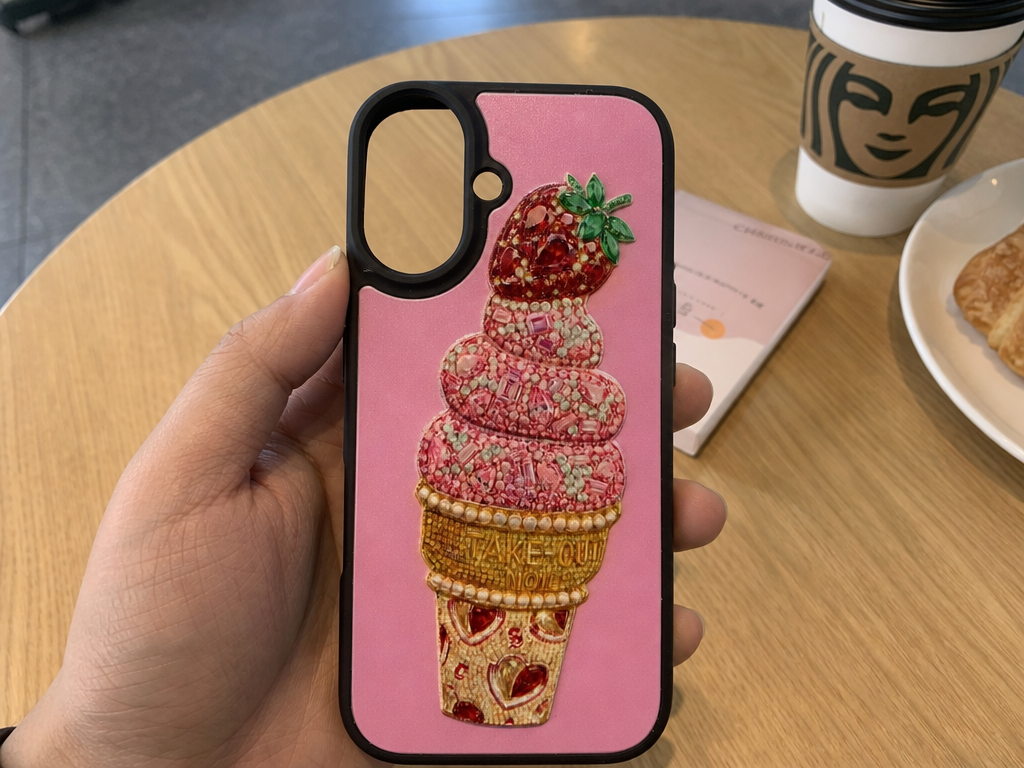
- Material: Silicone phone case
- Process: UV printing, layered for raised texture
- Type: Phone Case / Accessory
- Machine: xTool O1 Omni Printer
Stacking multiple ink passes lets a UV printer build real height, so a flat phone case ends up looking studded with gems and glitter that are actually printed, not glued on.
3. Colorful Geometric Wall Clock
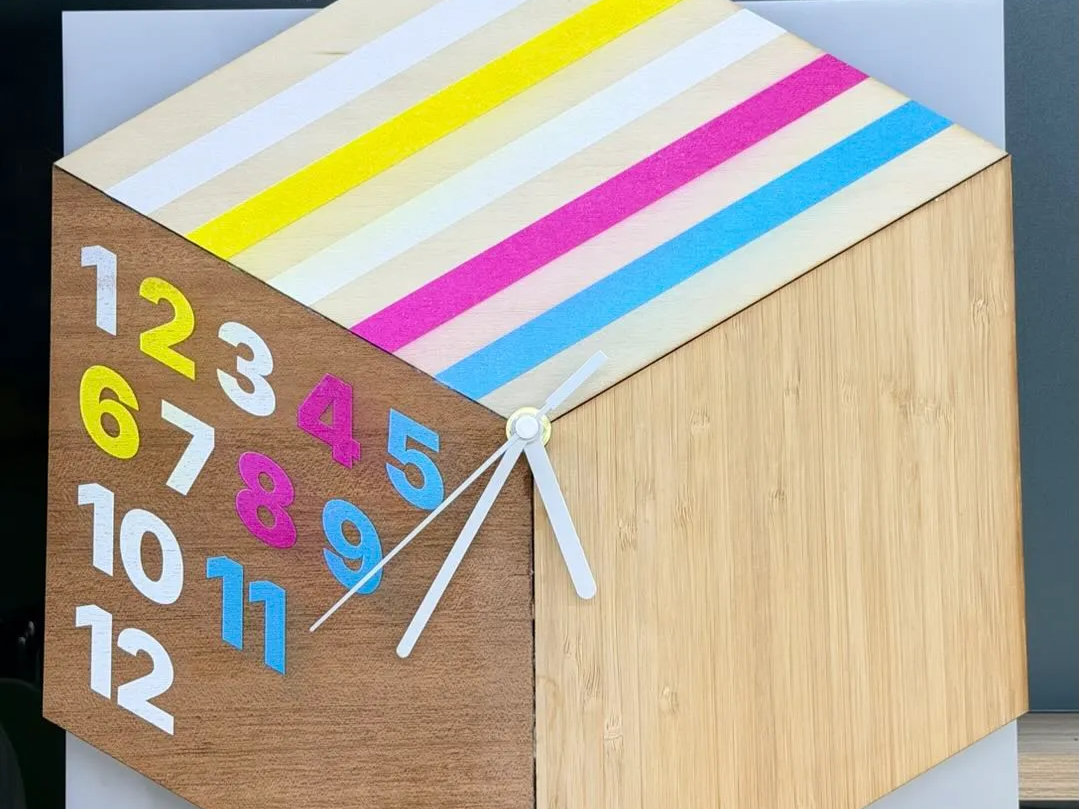
- Material: Bamboo
- Process: UV printing
- Type: Wall Clock / Home Decor
- Machine: xTool O1 Omni Printer
Wood grain would normally show through thin ink, but UV printing’s opaque white base layer keeps colors this saturated even over raw bamboo. Browse more modern wall clock ideas in the xTool community.
4. Textured Crochet-Effect Keychain
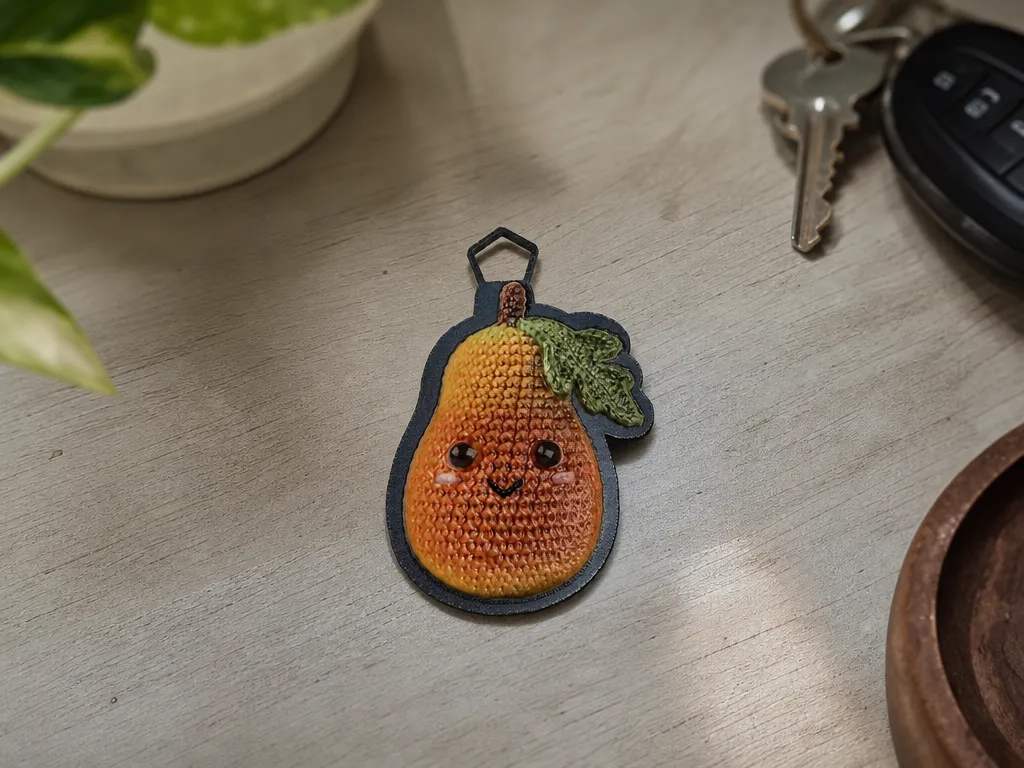
- Material: Acrylic
- Process: Laser cutting + UV printing
- Type: Keychain / Jewelry & Accessory
- Machine: xTool F2 Ultra
Layered UV printing can fake texture that is not really there — this keychain reads as hand-crocheted yarn, but it is laser cut acrylic and printed ink. Browse more crochet accessory projects in the xTool community.
5. Jeweled Picture Frame
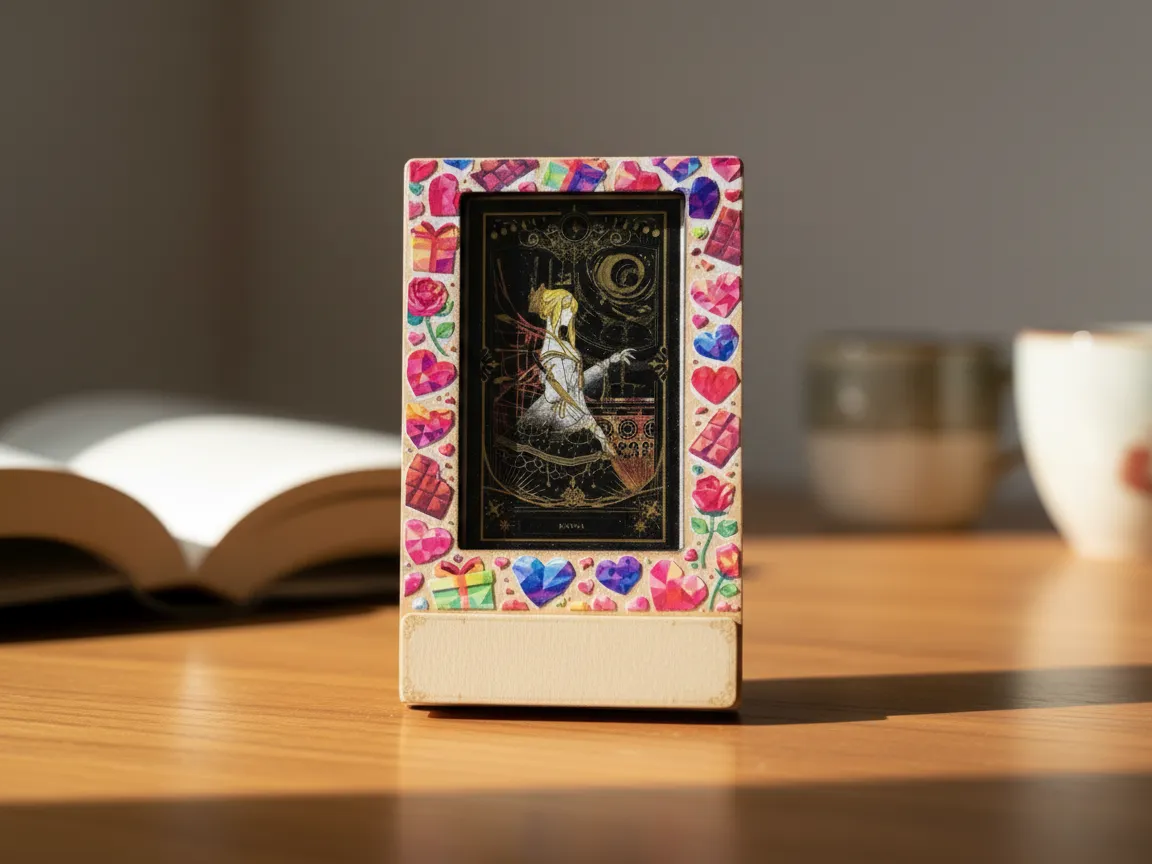
- Material: Plywood
- Process: Laser cutting + UV printing
- Type: Picture Frame / Home Decor
- Machine: xTool F1 Ultra
A busy, multicolor border like this would take hours to paint by hand — a UV printer lays down every heart and rose in one pass, so the frame is ready to gift the same day it is cut.
The bottom line
UV light is invisible, but its effects are not: it is the reason black lights glow, skin tans and burns, germicidal lamps disinfect, and UV printers can lay down full color on almost anything rigid. Know which band you are dealing with — UVA for everyday glow and curing, UVB for tanning and sunburn, UVC for sterilization — and the rest follows: enclosed UV printers and set resin are safe to handle, while raw lamps and uncured material deserve eye and skin protection.
Frequently Asked Questions
What is UV light in simple terms?
UV (ultraviolet) light is a type of electromagnetic radiation just beyond violet on the light spectrum, invisible to human eyes, that carries more energy than visible light. It is what causes tanning and sunburn, makes certain materials glow under a black light, and can be harnessed to cure ink and resin instantly.
Is UV light dangerous?
It depends on the band and exposure time. UVA from a black light or UV-curing lamp is low-risk in brief exposure, UVB causes sunburn with extended exposure, and UVC can damage skin and eyes within minutes — which is why germicidal UVC lamps are only used in enclosed or unoccupied spaces.
What’s the difference between UV light and a black light?
A black light is not a separate type of light — it is a lamp specifically built to emit UVA while filtering out most visible light, so all you notice is the glow effect on fluorescent materials rather than the light source itself.
Can you get a tan from a black light?
Not really. Black lights emit UVA at very low intensity, designed for glow effects rather than skin exposure. Tanning beds and the sun rely on much stronger UVA and UVB output, which is what actually darkens or burns skin.
What is UV printing used for?
UV printing is used to add full-color, durable graphics directly onto rigid objects — wood, metal, acrylic, phone cases, ceramic, leather — without the pretreatment regular inkjet printing needs. It is popular for personalized gifts, signage, coins, and product prototypes because the ink cures solid the instant it is printed.
Is UV-printed ink durable?
Yes, generally more durable than standard inkjet ink. Because UV curing hardens the ink into a solid, plastic-like layer immediately, it resists smudging, fading, and water better than ink that simply air-dries or soaks into a surface.