
Key Takeaways
- A laser etching machine uses a focused beam to melt a material's surface, leaving a raised, permanent mark.
- Etching is shallow (microns deep); engraving cuts deeper; marking changes color without removing material.
- It shines on metal — stainless steel, aluminum, brass — plus glass, ceramic, and coated surfaces.
- Fiber and UV lasers etch bare metal; a diode or CO2 laser needs a coating or marking spray.
- For production ID marks, jewelry, and glassware, an etching-capable fiber or UV machine is the tool.
A laser etching machine is a device that fires a focused laser beam at a material to melt its surface, creating a shallow, permanent mark you can see and feel. Unlike deep engraving, etching only alters the top few microns. Makers use it to add logos, serial numbers, and art to metal, glass, and coated surfaces.
What is a laser etching machine?
A laser etching machine turns a digital design into a permanent surface mark. Software sends the file to the machine, and the laser head traces it while firing a concentrated beam. The beam heats the surface just enough to melt and slightly raise it, changing how it looks and feels — without carving a deep groove.
Etching is a favorite in manufacturing and personalization because it's fast, contactless, and permanent. It survives handling, weather, and wear, which is why it's used for tool tags, medical devices, and jewelry.
Etching vs. engraving vs. marking
These three words get mixed up constantly. The difference is depth and method:
- Marking changes the surface color without removing material — for example, a fiber laser oxidizing steel to leave dark text.
- Etching melts the very top layer, raising a shallow, tactile mark a few microns deep.
- Engraving goes deeper, vaporizing material to cut a visible recess. Learn more in our guide to the laser engraver.
The same machine often does all three — you dial depth up or down with power and speed. Many etching machines are simply fiber or UV laser machines run at etching settings.
How does laser etching work?
Here's the process in order:
- You create or import a design. Vector art and high-contrast graphics work best.
- Software sets depth and contrast. You choose power, speed, and passes for a shallow etch.
- The laser fires across the surface. A lens focuses the beam to a fine point.
- The surface melts and reflows. The top microns change texture and color, leaving the mark.
Because the effect is shallow, etching is quick and repeatable — ideal for running the same mark across a whole batch of parts.
Types of laser etching machines
The laser source decides what you can etch.
Fiber laser
The standard for metal. A fiber laser etches steel, aluminum, brass, and titanium with crisp, high-contrast detail. A MOPA fiber variant adds adjustable pulses, unlocking true color etching on stainless steel.

UV laser
A "cold" UV laser etches glass, plastic, ceramic, and delicate surfaces with almost no heat or cracking. It captures the finest detail, so it's the specialist for premium, precise work.

CO2 laser
A CO2 laser etches glass, stone, and coated surfaces well, plus organics like wood and leather. It can't etch bare metal without a marking spray or coating.

What can you etch with a laser?
Etching favors hard, smooth surfaces. Common materials include:
- Stainless steel — tumblers, tools, knives, ID tags.
- Aluminum and anodized aluminum — nameplates, panels, tags.
- Brass and titanium — coins, jewelry, hardware.
- Glass and ceramic — mugs, bottles, awards (frosted effect).
- Coated and painted metal — the coating burns away to reveal contrast.
- Plastics — control panels, housings, medical parts (UV).
Bare metal and glass are where etching outperforms other methods — a permanent, wash-proof mark with no ink.
How to choose a laser etching machine
Match the machine to your material and volume. Bare metal needs fiber or UV; glass and delicate parts favor UV; color on steel needs MOPA. Here are three xTool machines for the most common needs — and for a wider, multi-brand comparison, see our roundup of the best laser etching machines.
xTool F1 Ultra
Best all-round metal etcher
The xTool F1 Ultra pairs a fiber laser for metal with a diode laser for everyday materials. The fiber side etches crisp, permanent marks on steel and aluminum.
At speeds up to 10,000 mm/s and in a portable body, it's a favorite for jewelry, dog tags, and small-batch metal personalization.
xTool F1 Ultra: the versatile dual-laser pick for metal etching plus everyday materials.
xTool F2 Ultra
Best for production and color
The xTool F2 Ultra is built for volume. Its 60W MOPA fiber runs fast and, with pulse control, etches true color onto stainless steel.
Dual 48MP cameras keep marks precise across big batches. If etching is your business, this is the workhorse.
xTool F2 Ultra: the production workhorse for high-volume and color etching.
xTool F2 Ultra UV
Best for glass and fine detail
The xTool F2 Ultra UV uses a cold UV beam that etches glass and plastic without cracking or scorching. It captures the finest detail of any laser type.
For glassware, delicate plastics, and premium products where flawless detail matters, the UV path is unmatched.
xTool F2 Ultra UV: the precision pick for glass, plastic, and delicate detail work.
Laser etching project ideas to try
See what laser etching produces — each Atomm community project comes with a free, ready-to-make file.
Brass commemorative challenge coin
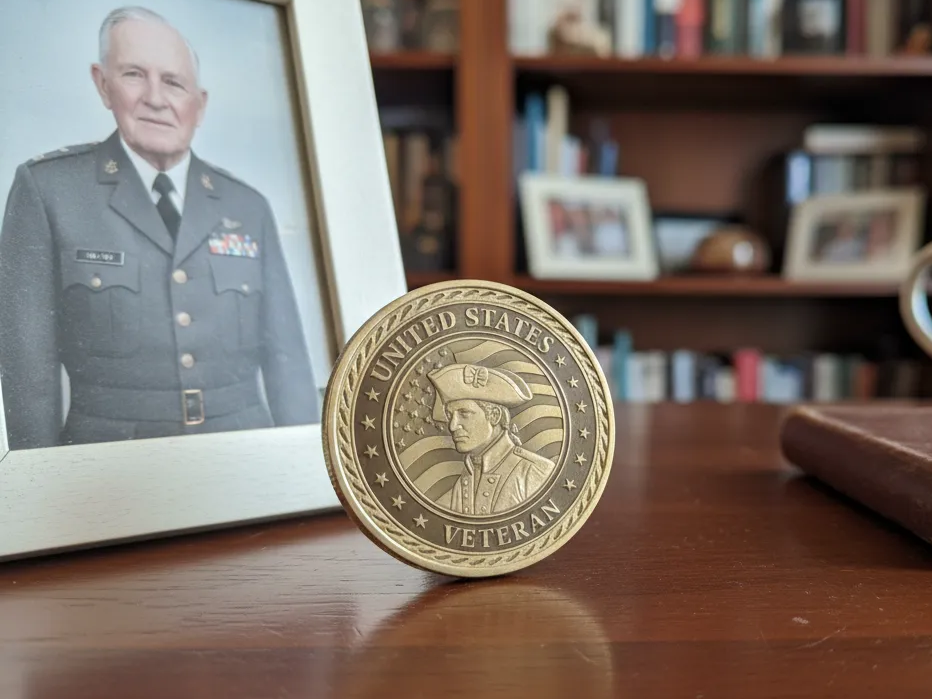
This veteran's challenge coin shows how sharp fiber etching gets on brass. Coins demand fine, even detail across a small round face. Etch the front and back, and you have a keepsake-quality piece that reads clearly and lasts for decades.
Get this design free →Phoenix color engraving
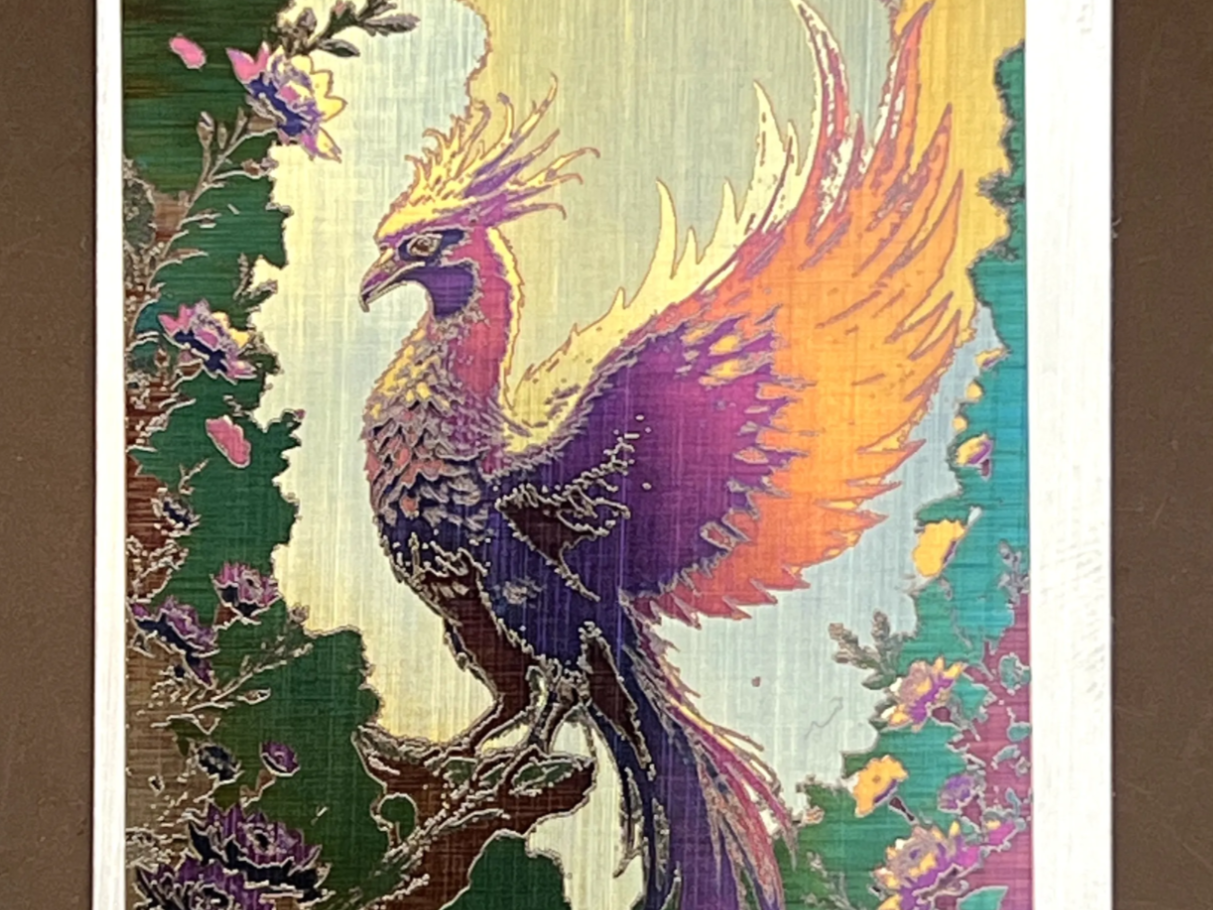
This phoenix uses pulse control to etch full color onto metal — no paint or ink. It's the showcase piece for MOPA and UV etching, where tuning the beam shifts the surface through a range of hues. Striking proof of what modern etching can do.
Get this design free →Metal eagle-head card
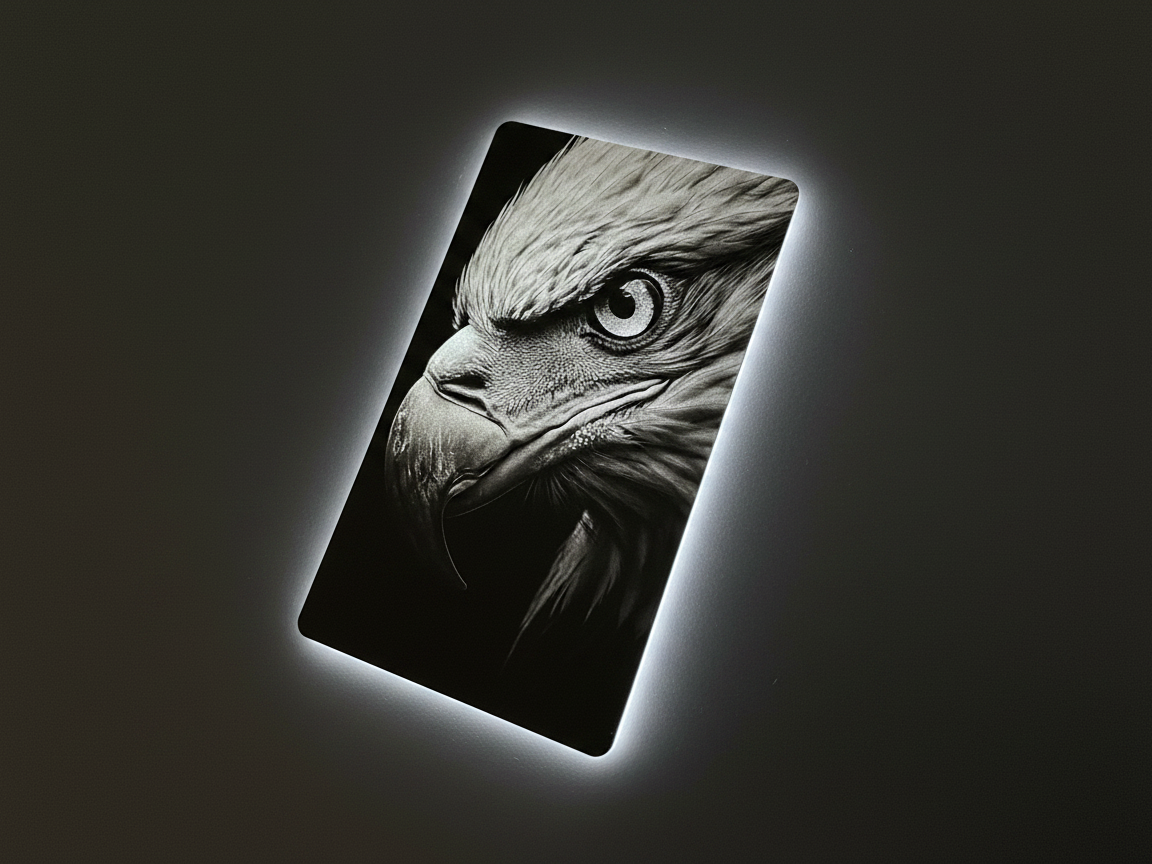
A metal business card with a detailed eagle head etched into the surface. Metal cards make a bold first impression, and etching keeps the design permanent and fingerprint-proof. A fiber laser renders the fine feather detail crisply.
Get this design free →Stainless steel flower pendant
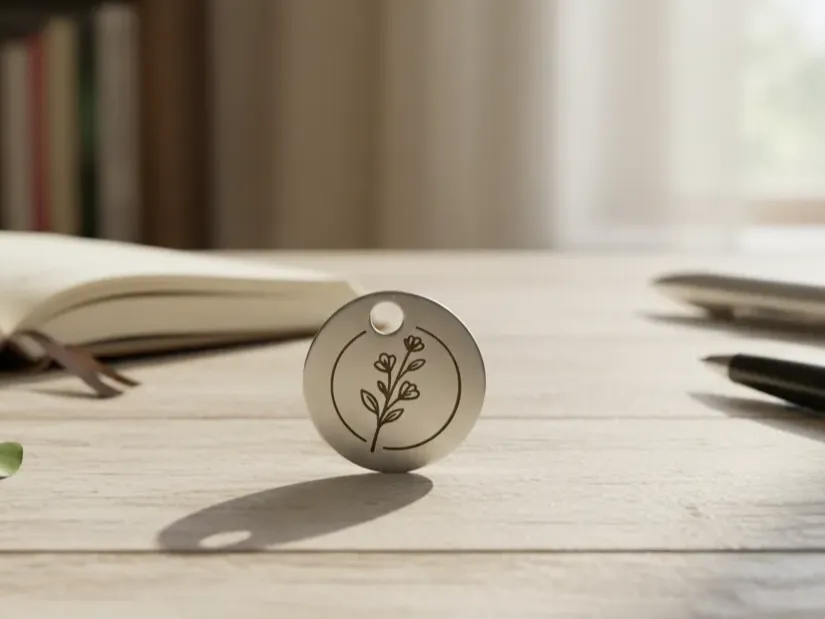
A minimalist flower etched into a stainless steel pendant. Jewelry is a natural fit for etching — the mark won't rub off against skin or clothing. Etch a batch of the same design in minutes for a clean, sellable accessory line.
Get this design free →The bottom line
A laser etching machine makes fast, permanent, shallow marks — the sweet spot between light surface marking and deep engraving. It's the go-to for metal and glass, where ink and paint fail. Choose a fiber laser for metal, UV for glass and delicate detail, and MOPA if you want color on steel. Ready to try? Grab a free, ready-to-make design and start etching.
Frequently asked questions about laser etching machines
What is the difference between laser etching and laser engraving?
Etching melts only the top few microns for a shallow, tactile mark, while engraving vaporizes material to cut a deeper recess. Etching is faster; engraving is more durable against heavy wear.
Can a laser etching machine etch metal?
Yes — a fiber or UV laser etches bare metal like steel, aluminum, and brass directly. A diode or CO2 laser needs a marking spray or coating to mark metal.
Is laser etching permanent?
Yes. Because the mark is fused into the surface rather than printed on top, it resists washing, weather, and abrasion, which is why it's used for tools and ID tags.
Can you etch glass with a laser?
Yes. A CO2 or UV laser frosts glass for a permanent etched look. UV lasers give the finest detail with the least risk of cracking.
What is color laser etching?
A MOPA fiber laser can vary its pulses to oxidize stainless steel into different colors, producing full-color marks without any paint or ink.
Ready to make your mark?
Explore free, ready-to-etch metal designs — or generate your own artwork in seconds.