
The heat transfer vinyl you buy decides more about the finished shirt than the machine that cuts it. Thickness governs how it feels, adhesive quality governs how many washes it survives, and weedability governs whether small text is a pleasure or an hour of picking.
This guide compares the vinyl worth buying for garments, on the specifications that actually differ, and explains which one suits which job.
Browse HTV designsFree downloadable cut files from the Atomm community, ready to weed and press.See the designsKey Takeaways
- For shirts, thinner is better — it feels lighter and moves with the fabric instead of cracking.
- Weedability matters more than price once a design has small text in it.
- Check the peel temperature on the packaging. Peeling a cold-peel vinyl hot lifts the design straight off.
What Makes Good HTV for Shirts

Thickness
A shirt is worn, so a thick vinyl reads as a plastic patch and cracks where the fabric folds. Thinner vinyl costs slightly more and is worth it on anything anyone will actually wear.
Weedability
This is where cheap vinyl really costs you. Good vinyl releases cleanly around small letters; poor vinyl tears or drags neighbouring pieces up with it.
Application temperature
Lower is safer. Some garments — performance polyester, leather, anything with elastane — scorch before a high-temperature vinyl has bonded.
Peel type
Hot, warm, or cold peel. Vinyl that peels either way is more forgiving in a batch, where items come off the press at different moments.
Buy the roll size to match the run, not the discount
Vinyl does not expire quickly, but a 100-foot roll of a colour you use twice is money parked on a shelf. Buy long rolls only in black and white, which every design eventually needs.
Best HTV for Shirts at a Glance
| Vinyl | Best for | Price | Notes |
|---|---|---|---|
| Siser EasyWeed | Almost everything | Per sheet or roll | Thin, hot or cold peel, 305°F |
| HTVRONT 12″ x 60 ft roll | Volume in one colour | $42.99 | Economical, weeds small text well |
| HTVRONT 12″ x 100 ft roll | Black and white staples | $79.99 | Lowest cost per foot |
| HTVRONT 36-pack bundle | Starting out, many colours | $23.99 | 25 colours, 12″ x 10″ sheets |
| HTVRONT glitter roll | Speciality finish | From $8.99 | 10″ wide, 11 colours, top layer only |
The Best Heat Transfer Vinyl for Shirts
1. Siser EasyWeed
Best overall for garments
EasyWeed is the reference point the rest of the market is measured against, and the reasons are specific rather than reputational: it is thinner than most competitors, applies at a lower temperature, and its backing does not lift while you weed.
Peeling hot or cold is the feature that matters in practice. In a batch, shirts leave the press at different moments, and a vinyl that only tolerates one peel temperature turns that into a failure rate.
Pros
- Thin, so it feels light and flexes with the fabric
- Lower application temperature than most
- Hot or cold peel — forgiving in batches
- Backing stays put during weeding
Cons
- Costs more per foot than budget rolls
- EasyPress users must add roughly 30 degrees
Siser EasyWeed: the default choice for anything worn, and the one to learn on.
2. HTVRONT HTV Roll 12″ x 60 ft
Best value for a working colour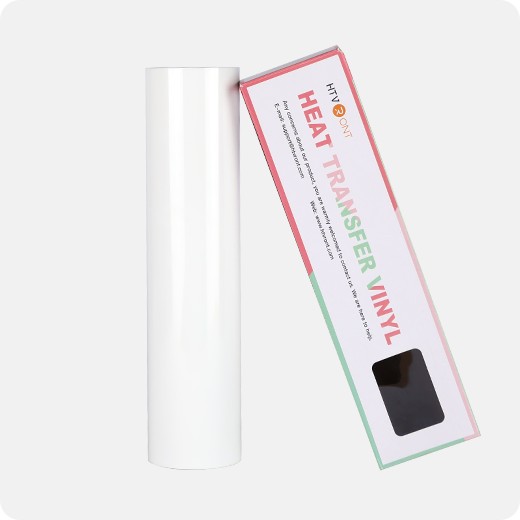
Sixty feet is the size that makes sense once a colour has proven itself: enough for dozens of shirts without committing to a hundred-foot roll of something you may not reorder.
HTVRONT positions this as the economical option and it behaves like one, but the adhesive backing holds well enough that intricate designs and small letters weed without dragging.
Pros
- Far cheaper per foot than cut sheets
- Handles small text better than most budget vinyl
- Works across a wide range of fabrics
Cons
- Thicker than premium vinyl, so a heavier hand feel
- Colour range per roll is limited to one
HTVRONT HTV Roll 12″ x 60 ft: the sensible second purchase, once you know which colour you actually go through.
3. HTVRONT HTV Roll 12″ x 100 ft
Cheapest per foot
The same material in the size that only makes sense for colours you never stop using. At roughly eighty dollars for a hundred feet, the per-foot cost is the lowest of anything in this guide.
Restrict it to black and white. Those two are in almost every design, so the roll turns over; a hundred feet of a seasonal colour is a shelf ornament.
Pros
- Lowest cost per foot
- One roll covers a long run of shirts
- Same material as the 60-foot roll
Cons
- Only worth it for colours you use constantly
- Large rolls need somewhere to store them properly
HTVRONT HTV Roll 12″ x 100 ft: buy this in black and white only, and buy shorter rolls of everything else.
4. HTVRONT HTV Bundle, 36 Sheets
Best for starting out
Rolls are the cheap way to buy one colour. This is the cheap way to find out which colours you actually want, which is a different problem and the one most people have first.
Twenty-five colours at twenty-four dollars also solves multi-colour designs without buying five rolls. A layered logo needs a small amount of several colours, not a lot of one.
Pros
- Cheapest way to cover many colours
- Sheet size suits chest prints without waste
- Weeding hook and Teflon sheet included
Cons
- Cost per square foot is far above roll vinyl
- Sheets run out fast on anything repeated
HTVRONT HTV Bundle, 36 Sheets: buy this first, then buy rolls of whichever colours you burn through.
5. HTVRONT Glitter HTV Roll
Best speciality finish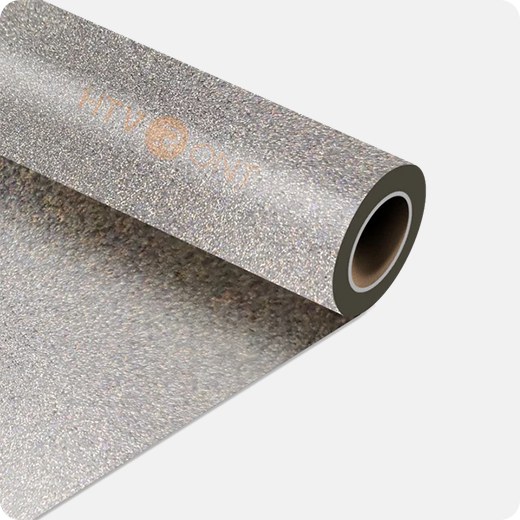
Every guide warns that glitter weeds badly, and that is true of the material in general rather than of this roll specifically. What you are buying is the finish, and no standard vinyl imitates it.
Use it where the sparkle is the whole point — a name, a number, a single bold shape — and keep fine script in standard vinyl. Glitter also has to be the top layer of any stack.
Pros
- A finish standard vinyl cannot reproduce
- Cheap enough to try on one design
- Sold in short rolls, so no large commitment
Cons
- Thicker, so it weeds worse than standard vinyl
- Cannot have another layer pressed over it
HTVRONT Glitter HTV Roll: worth owning one roll of, but not the vinyl to build a design library on.
Cricut Everyday Iron-On is the other name you will see, and its selling point is that Design Space carries automatic cut settings for it. You pay noticeably more per square foot for that convenience.
How to Choose HTV for Shirts
Four situations, four different answers.
Starting out?
Buy Siser EasyWeed in black and white. Learning to weed and press on forgiving vinyl removes one variable while you get the temperature and timing right.
Selling shirts in volume?
Switch the two colours you use constantly to 100-foot rolls and keep premium vinyl for detailed jobs. The saving is real and the hand feel difference is invisible on a bold logo.
Designs with fine script or small text?
Pay for thin premium vinyl. Weeding time is the hidden cost of cheap material, and it does not show up until the design is already cut.
Working on performance fabric or leather?
Check the application temperature before the brand. The garment sets the ceiling, and a vinyl needing 320°F is unusable on something that scorches at 280°F.

Good HTV Machines to Press It With
Every vinyl above states a temperature, a time, and a pressure. A press that cannot hold those numbers turns good vinyl into a design that lifts in the wash, so the machine is part of the buying decision.
Two figures decide whether it can. The first is the temperature range — it has to reach the vinyl's figure and, more importantly, sit below it for garments that scorch. The second is evenness, because a plate that is hotter in the middle bonds the middle only.
1. xTool Heat Press
Enough range for every vinyl here
Line the range up against the vinyl in this guide and the fit is obvious. EasyWeed wants 305°F, the HTVRONT rolls sit in the same band, and the 212°F floor leaves headroom for performance fabric that will not take a cotton setting.
The Mini Press is what makes the roll vinyl usable on more than shirt fronts. A 60-foot roll gets spent far faster once sleeves, pockets, and caps are on the table.
Pros
- Range covers every vinyl compared above
- Low end suits heat-sensitive garments
- Mini Press handles sleeves and caps
- Cheapest way to press properly rather than iron
Cons
- Pressure is applied by hand, so it varies
- Small platen for oversized prints
xTool Heat Press: the press to buy alongside your first rolls of vinyl.
2. HTVRONT Auto Heat Press
Best mid-range automatic
The jump from manual to automatic normally costs a lot more than this. Auto-adjusting pressure and an automatic lift remove the two things a manual press asks you to judge by feel.
The 15-inch platen is the other reason to step up. A full adult chest print at 11 inches fits inside it in one press, where a smaller plate means repositioning and a visible seam where the two presses meet.
Pros
- Full chest prints in a single press
- Automatic pressure, no leaning on a handle
- Auto lift means no timing the release by hand
Cons
- Large footprint for a home bench
- No small plate for sleeves or caps
HTVRONT Auto Heat Press: the value pick if your designs are chest-sized and your hands are tired.
3. HTVRONT Auto Heat Press 2 — Digit
Best for repeatable settings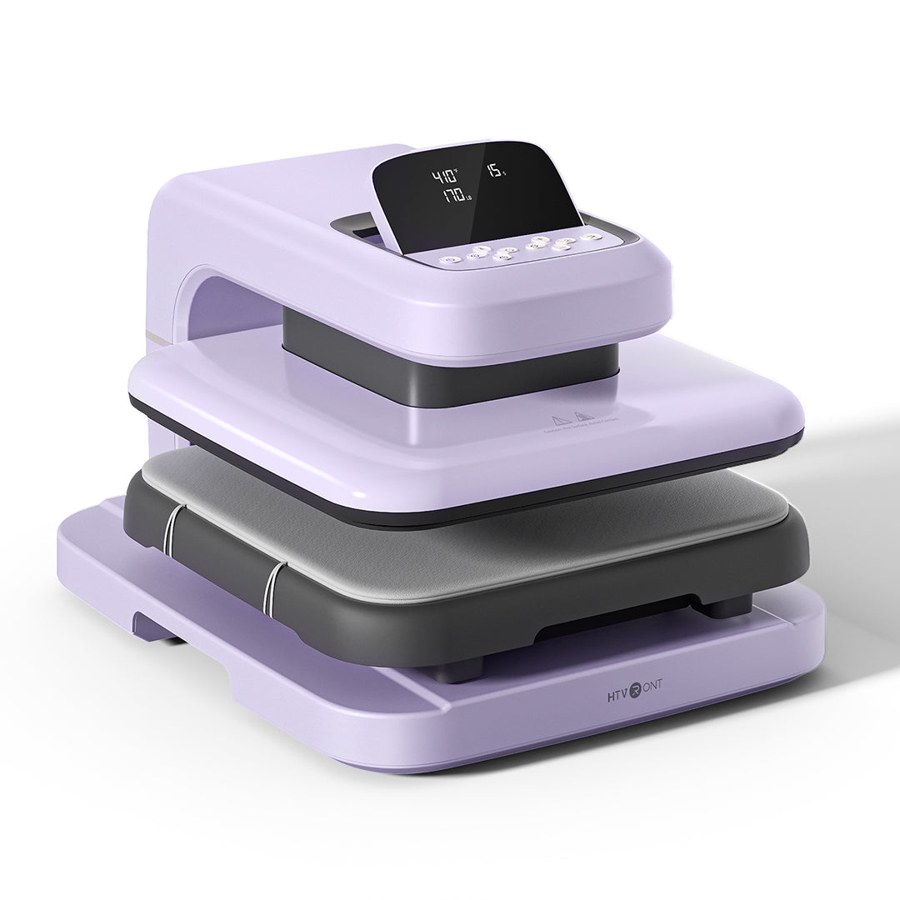
This is the version to want when you are switching between vinyls rather than pressing one all day. Every vinyl above states a different temperature and time, and digital control makes those settings something you dial in rather than approximate.
HTVRONT positions it for business use, and the practical meaning is repeatability — shirt eighty comes off the press with the same numbers applied as shirt one.
Pros
- Digital control suits switching between vinyls
- Automatic pressure across a long run
- Built for continuous use rather than occasional
Cons
- Costs more than twice the entry press
- More capability than a hobby run needs
HTVRONT Auto Heat Press 2 — Digit: the one to buy if you press several different vinyls in the same session.
4. xTool WonderPress
For long runs off a 100-foot roll
If you have bought a hundred-foot roll, you are pressing at a volume where hand pressure drifts. Automatic pressure applies the same force to shirt one and shirt eighty, which is the difference between a consistent batch and a return rate.
Clearance matters for the same reason the roll does. Hoodies are where volume sellers make their margin, and a shallow press cannot compress one evenly enough to bond the vinyl across the whole design.
Pros
- Identical pressure across a whole batch
- Takes hoodies as easily as tees
- Modular, so it covers sublimation and DTF too
Cons
- Overkill for occasional shirts
- Costs more than the vinyl it presses
xTool WonderPress: the upgrade that pays back when shirts stop being a hobby.
Conclusion
For shirts specifically, thin beats cheap. A vinyl that flexes with the fabric survives washing and does not announce itself as a plastic patch, and that is worth the extra per foot.
Siser EasyWeed is the safe default and the easiest to learn on. Move the colours you burn through onto long HTVRONT rolls once you know what those colours are.
New to the material? Start with what HTV is, or go straight to using HTV with a Cricut for the cut and press settings.
Frequently Asked Questions about HTV for Shirts
What is the best heat transfer vinyl for shirts?
Siser EasyWeed for most people. It is thin, applies at a relatively low 305°F, peels hot or cold, and weeds cleanly, which matters more than price once a design contains small text.
Is expensive HTV actually better?
For garments, usually yes, and the difference is thickness and weedability rather than colour. On a bold logo the gap is invisible; on fine script cheap vinyl costs you an hour of weeding.
What temperature should HTV be applied at?
It depends on the brand. Siser EasyWeed specifies 305°F (150°C) for 10 to 15 seconds at medium pressure. Always use the figures on the packaging rather than a generic setting.
What does hot peel and cold peel mean?
When to remove the clear carrier. Cold peel means waiting until the garment cools; peeling it hot lifts the design off. Vinyl rated for either is more forgiving when pressing a batch.
Can I use the same HTV on cotton and polyester?
Usually, but the garment sets the temperature limit. Performance polyester and anything with elastane scorch at temperatures cotton tolerates, so check the fabric before the vinyl.
How much HTV do I need for one shirt?
A typical chest design uses well under a square foot. A 12 by 60 inch roll therefore covers dozens of shirts, which is why roll vinyl is far cheaper than buying cut sheets.
Find a design to cut and press
Browse free community cut files ready to weed and heat press.
