
Five methods print a shirt, and they differ in one physical way: where the colour ends up relative to the fabric.
Hand feel, durability, which fabrics work and what it costs all follow from that single difference. Get it clear and the choice stops being confusing.

Find a shirt designFree community designs, ready to print or press.Browse designsKey Takeaways
- The methods differ by where the colour sits — everything else follows.
- Screen printing and HTV sit on top: toughest, and the easiest to feel.
- DTG and sublimation go in: softest, and the fussiest about fabric.
- DTF is the middle answer, which is why it has taken over small-batch work.
The Types of Shirt Printing, Compared
Read this first. Every row is expanded below, and each method links to its own full guide.
| Method | Colour sits | Fabrics | Best quantity | Feel |
|---|---|---|---|---|
| Screen printing | Thick layer on top | Most | Dozens upwards | Firm, you feel it |
| Heat transfer vinyl | Cut sheet on top | Most | One to a few | Firm, slightly raised |
| DTF transfer | Thin film on top | Most | One to hundreds | Thin layer |
| DTG | Ink in the fibres | Cotton first | One to dozens | Soft |
| Sublimation | Dye inside the fibre | Polyester only | One upwards | Nothing to feel |
| Inkjet transfer paper | Coating on top | Most | One | Stiff patch |
1. Screen Printing
The oldest method here, and still the cheapest per shirt once the quantity is large enough.

| How common | The industry standard for bulk apparel |
|---|---|
| Garments | Cotton, blends, most fabrics |
| Materials | Mesh screens, emulsion, plastisol or water-based ink |
| Machine needed | Press, screens and an exposure setup |
| Cost to start | A basic kit from roughly $100; a laser-engraved screen kit is $399 |
| Best quantity | Dozens upwards |
How it works
Ink is pushed through a stencil held in a mesh screen, one screen per colour, then heat cured. The result is a thick, tough ink layer sitting on the surface.
Its economics are unlike everything else here. Making the screen costs real time, so the first shirt is expensive and the hundredth is nearly free. The full process is in what screen printing is. It is set against the two methods people weigh it against in DTG vs screen printing and DTF vs screen printing.
Pros and cons
Pros
- Cheapest per shirt at volume
- The most durable finish of any method
- Vivid, opaque colour even on black garments
- Works on almost any fabric
Cons
- Setup cost per design is high
- One screen per colour, so photographs are impractical
- Needs space, a darkroom step and cleanup
- Changing the design means starting over
Best for
- Dozens or hundreds of the same design
- Two or three flat colours rather than photographic artwork
- Team kit, merch runs and event shirts
- Anywhere the shirt has to survive years of washing
2. Heat Transfer Vinyl (HTV)
No ink at all: the colour is a sheet of film, cut to shape and bonded on with heat.

| How common | The usual starting point for home and small-batch work |
|---|---|
| Garments | Cotton, blends, polyester with the right vinyl |
| Materials | Coloured HTV sheets or rolls |
| Machine needed | A cutting machine plus a heat press or iron |
| Cost to start | Vinyl from a few dollars a sheet; a press from about $159 |
| Best quantity | One to a few |
How it works
A blade cuts your shape from a sheet of coloured film, you weed away the waste, and heat bonds what is left onto the shirt.
The colour is the material, which is both the strength and the limit: solid colours look immaculate and photographs are impossible. It is covered in what HTV is, with the two kinds of transfer explained in what a vinyl transfer is. Where vinyl stops being worth the weeding is worked out in DTF vs HTV.
Pros and cons
Pros
- Cheap to start and easy to learn
- Immaculate solid colours and crisp lettering
- Specialty finishes: puff, glitter, reflective, flock
- No printer and no ink to maintain
Cons
- Every extra colour is another layer to cut, weed and press
- Photographic or gradient artwork is out of reach
- Weeding fine detail is slow and fiddly
- You can feel the sheet on the shirt
Best for
- Names, numbers and text
- Flat logos in one or two colours
- One-off gifts and small personalised runs
- Textured effects a printer cannot produce
3. DTF Transfer
Print onto film now, press onto a shirt later. That separation is why it has taken over small-batch work.

| How common | The fastest-growing method for print-on-demand |
|---|---|
| Garments | Cotton, polyester, blends, nylon, dark or light |
| Materials | PET film, DTF ink, adhesive powder |
| Machine needed | A DTF printer, or buy ready-made transfers |
| Cost to start | Bought-in transfers from about $1 each; a printer runs into the thousands |
| Best quantity | One to hundreds |
How it works
The design is printed onto film, dusted with adhesive powder, cured, and then pressed on. A thin printed layer ends up on the surface with glue underneath it.
Its trick is stock: you can print a sheet today and press it whenever someone buys. See what DTF printing is. Its two closest calls are DTF vs sublimation, which the fabric decides.
Pros and cons
Pros
- Full colour, including photographs, with no colour limit
- Works on nearly any fabric and any garment colour
- Transfers can be printed in advance and stored
- No pretreatment step
Cons
- A thin film layer you can feel on the shirt
- Powder and curing add mess and a step
- Printer and consumables are a real investment
- Press settings matter, and a bad press shows
Best for
- Full-colour artwork on mixed fabrics
- Print-on-demand and unpredictable order sizes
- Small businesses that cannot commit to one design
- Anything with more colours than vinyl can handle
4. DTG Printing
An inkjet that prints straight onto the garment, so nothing sits on top of the fabric.

| How common | Standard for premium cotton print-on-demand |
|---|---|
| Garments | Cotton first; synthetics do not absorb the ink properly |
| Materials | Water-based textile ink, plus pretreatment for dark shirts |
| Machine needed | A DTG printer |
| Cost to start | Machines from around $2,199 |
| Best quantity | One to dozens |
How it works
An inkjet prints straight onto the garment and the ink soaks into the fibres. Nothing sits on top, so there is no edge to catch a fingernail on.
It is a cotton process. Dark garments need pretreatment plus a white underbase, which costs more per print. See what DTG is, and DTG vs DTF for the comparison that decides most equipment purchases.
Pros and cons
Pros
- The softest hand feel of any printed method
- Full photographic colour with no screens
- No transfer to store, cut or weed
- Excellent on premium cotton
Cons
- Cotton only in practice
- Dark garments need pretreatment, which slows everything down
- Cost per print rises sharply with a white underbase
- Machines need regular use or the heads clog
Best for
- Premium cotton tees where feel is the selling point
- Photographic and highly detailed artwork
- One-offs and small runs without setup
- Brands that want no visible print layer
5. Sublimation
The only method with nothing on the surface at all: the fabric itself is dyed.

| How common | The default for polyester sportswear and blanks |
|---|---|
| Garments | Polyester only; light colours only |
| Materials | Sublimation ink and transfer paper |
| Machine needed | A sublimation printer and a heat press |
| Cost to start | Converted printers from about $200; purpose-built from $399 |
| Best quantity | One upwards |
How it works
Heat turns solid dye directly into gas, which bonds with polyester fibres and becomes part of them. There is no layer on the surface at all — the fabric is dyed.
That is why it cannot fade, crack or peel, and also why it only works on polyester. On cotton the dye has nothing to bond to and washes straight out. See what sublimation is, and the process itself is walked through in how to do sublimation printing.
Pros and cons
Pros
- Completely invisible to the touch
- Cannot crack, peel or fade
- Full colour with no weeding or cutting
- Prints edge to edge and over seams
Cons
- Polyester only, which rules out most cotton tees
- Light garments only — there is no white ink
- A dedicated printer that cannot go back to normal ink
- Colour on the screen and colour on the shirt differ until you profile it
Best for
- Polyester sportswear, jerseys and performance tops
- All-over and edge-to-edge designs
- Anything that must survive heavy washing
- Light-coloured blanks made for the process
6. Inkjet Transfer Paper
The cheapest possible start, and the least durable finish here.
| How common | Common at home, rare in any business |
|---|---|
| Garments | Most fabrics, best on light cotton |
| Materials | Coated transfer paper for an ordinary inkjet |
| Machine needed | A normal home printer and an iron |
| Cost to start | About $10 a pack, assuming you own a printer |
| Best quantity | One |
How it works
An ordinary home inkjet prints onto coated paper, and an iron or press moves the coating across.
What you give up is durability. The coating sits on the surface as a slightly stiff patch and softens with washing far sooner than anything else here. All four home routes are priced in how to print a shirt.
Pros and cons
Pros
- No new equipment if you already have a printer
- Around $10 to try the whole idea
- Full colour straight away
- Ready in minutes
Cons
- The least durable finish of the six
- A stiff, visible patch on the fabric
- Fades and cracks within a season of washing
- Light fabrics only, unless you buy dark-transfer paper
Best for
- One shirt needed today
- Testing a design before committing to a real method
- Costumes, party shirts and one-off jokes
- Anything that does not need to survive the year
Embroidery Is Not a Printing Method
Embroidery stitches thread into the fabric instead of adding colour to it. It outlasts every print here and reads as more expensive, which is why caps and workwear use it. See what embroidery is.
What it cannot do is fine detail or small text. A stitch has a minimum size, and photographs are out of the question.
How to Choose a Shirt Printing Method
One shirt, needed soon
Inkjet transfer paper if you own a printer, or a bought DTF transfer if you own a press. Neither has any setup.
Text, names or numbers
Heat transfer vinyl. One or two flat colours is exactly what it is good at, and the finish outlasts any printed alternative at that complexity.
Full colour, mixed fabrics, unpredictable quantity
DTF. It is the only method with no fabric restriction, no setup cost and the ability to make stock before orders exist.
Dozens of the same design
Screen printing. The screen stops being a cost and starts being an advantage somewhere in the low dozens.
Polyester sportswear
Sublimation, and nothing else comes close on feel. Just confirm the garment is polyester before you buy the blanks.
Designing the artwork before you pick a method is the wrong order, and how to design a shirt explains why the method has to come first.
Design a Shirt With These Projects
Five community designs, each suited to a different method above. Every file is free: download it, change the wording, and print or press it.
1. Halftone Knockout Graphic Tee
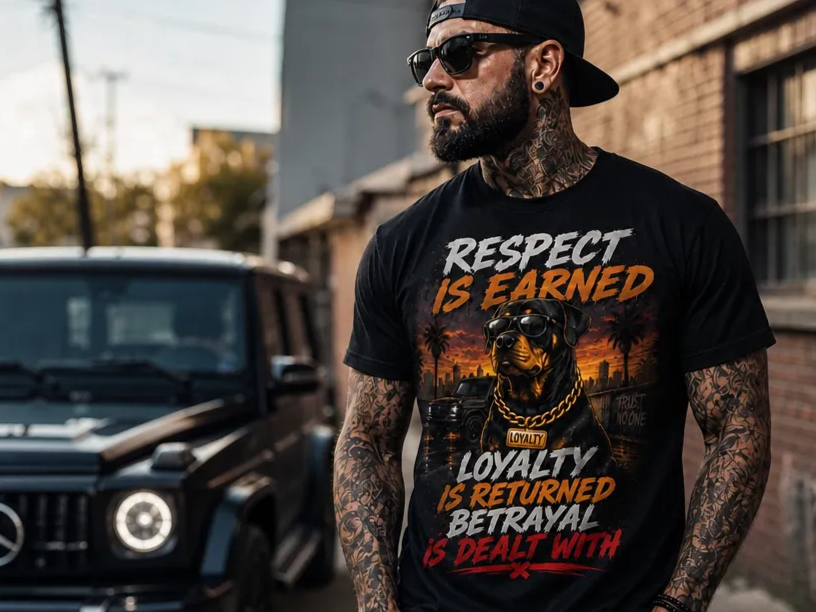
Full colour on a dark shirt, with the black areas deliberately removed so the garment shows through them. That knockout is the reason it feels light: less ink on top means less to feel and less to crack.
Get this design →2. Single-Colour Script Design
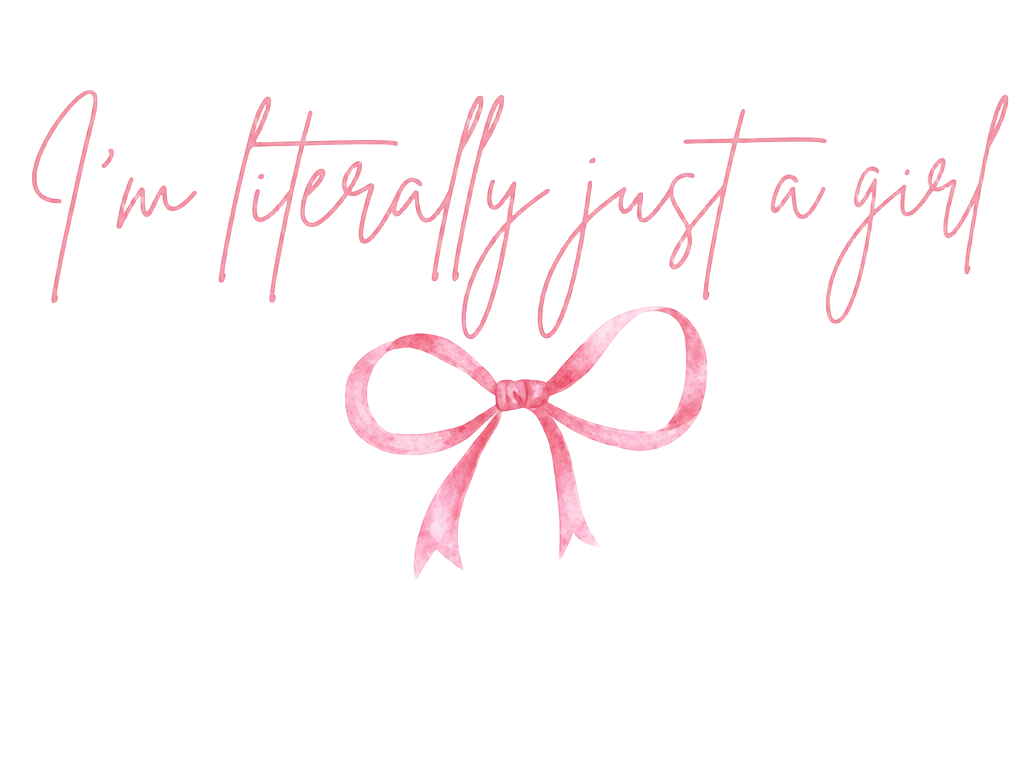
One colour and clean closed shapes, which is the profile heat transfer vinyl was made for. Cut, weed, press — no printer in the process at all, and a finish that outlasts inkjet transfer paper.
Get this design →3. Puff Vinyl Shirt Design

Vinyl with a foaming agent in it, so the design rises off the fabric under heat. It is the clearest example of colour sitting on top rather than in the weave — you can see the height before you even touch it.
Get this design →4. Occasion Graphic in Transparent PNG

The same file works three ways, which is what a transparent PNG at full resolution buys you: press it as a DTF transfer, print it DTG, or sublimate it onto polyester without redrawing anything.
Get this design →5. Jersey Name and Number
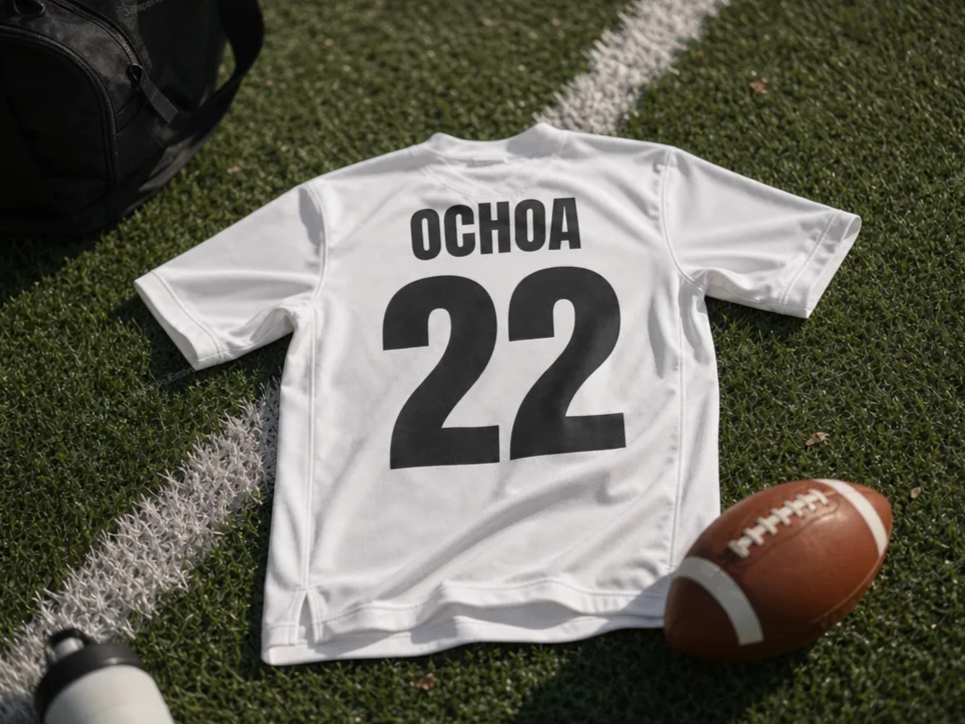
Typography only, at real jersey sizes — a 2.25 inch name over an 8 inch number. Team work is where vinyl still wins outright, because every piece is a flat solid colour and the durability matters more than the detail.
Get this design →Conclusion
Six routes, one organising idea: the higher the colour sits above the weave, the more you feel it and the more there is to crack.
Screen printing and vinyl sit highest and last longest under abuse. DTG and sublimation go into the fabric and feel like nothing. DTF sits in between, which is why it fits the most situations.
Pick by fabric and quantity first, then by feel. The artwork comes last, because the method decides what the artwork is allowed to be.
Frequently Asked Questions About Shirt Printing Types
What are the different types of printing on shirts?
Five that are actually printing: screen printing, heat transfer vinyl, DTF transfers, DTG and sublimation. Inkjet transfer paper is a sixth cheap route, and embroidery is a common alternative that is stitched rather than printed.
Which type of shirt printing lasts the longest?
Screen printing and sublimation, for opposite reasons. A cured screen print is a thick, tough ink layer; sublimation dye is inside the polyester fibre, so there is nothing on the surface to crack or peel at all.
What is the cheapest way to print shirts?
Inkjet transfer paper, at around $10 for a pack of sheets if you already own a printer and an iron. It is also the least durable, so it suits one-off shirts rather than anything you sell.
Which shirt printing method is best for small quantities?
DTF transfers or heat transfer vinyl. Neither has a setup cost per design, so printing one shirt costs almost the same per unit as printing ten. Screen printing is the opposite.
Can you print on polyester shirts?
Yes, and the method matters. DTF, HTV and sublimation all work on polyester; sublimation only works on polyester. DTG is built for cotton and struggles on synthetics.
Which method feels softest on the shirt?
Sublimation first, because nothing sits on the fabric. DTG second, because the ink soaks into the fibres. Screen printing and HTV sit highest and are the easiest to feel with a fingertip.
Find a shirt design
Free community designs to print or press, or generate your own artwork first.
